
Purpose of the flight and payload description
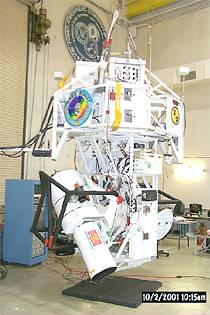
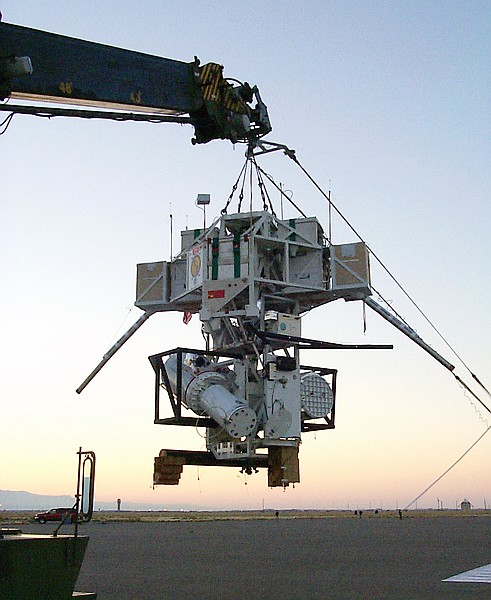
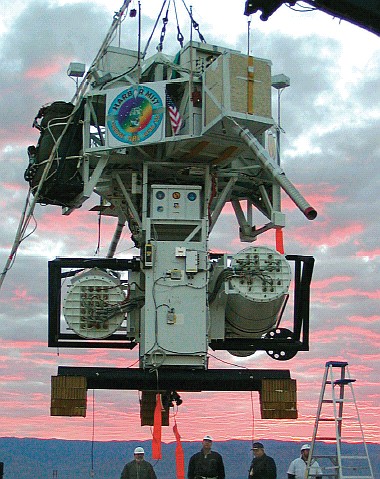
This balloon flight was aimed to test the Revolutionary Imaging Technology (RIT) sparse aperture imaging digital cameras in a high altitude balloon experiment. The payload consisted of a set of pressure vessels containing the RIT cameras and computer electronics.
The RIT program was created to transition ground-based sparse-aperture optical imaging systems used for astronomy to space-based sparse-aperture imaging systems used for reconnaissance. The program envisioned a step-by-step demonstration process involving laboratory tests, ground-based experiments, low-altitude airship experiments, high-altitude balloon experiments, leading to a LEO demonstration satellite and potential for ultimate GEO implementation.
The program was in charge of Research Support Instruments (fromerly known as Visidyne) that designed, developed, and operated the RIT sparse-aperture testbed.
Details of the balloon flight
Balloon launched on: October 2001
Launch site: Holloman Air Force Base, Alamogordo, New Mexico, US
Balloon launched by: Air Force Research Laboratory (AFRL)
Balloon manufacturer/size/composition: Zero Pressure Balloon 6.000.000 cuft
End of flight (L for landing time, W for last contact, otherwise termination time): October 2001
External references
- Visidyne's website one of the firms involved in the project
Images of the mission
StratoCat is an independent, non-commercial project maintained to preserve and share the history of scientific and stratospheric ballooning. If you find the site useful, you can help keep it running with a small donation toward its operating costs. Every contribution, even the equivalent of a cup of coffee, is greatly appreciated.