Purpose of the flight and payload description
The Stratospheric Projectile Experiment of Entry Dynamics (SPEED) is a NASA Ames Research Center initiative developed to obtain flight data on the dynamic behavior of blunt atmospheric-entry vehicles in the transonic and low-supersonic regimes. The initiative addresses uncertainties in predicting and experimentally characterizing entry-vehicle stability during flight conditions in which aerodynamic forces and moments can produce oscillatory, divergent, or unstable behavior. These characteristics can affect entry-system requirements, vehicle architecture, and mission design. Existing experimental facilities provide limited coverage of the relevant Mach-number range and do not reproduce the continuous evolution of vehicle dynamics experienced during atmospheric entry. SPEED was developed as a stratospheric free-flight test architecture intended to expose scaled entry capsules to representative dynamic conditions over a continuous range of Mach numbers.
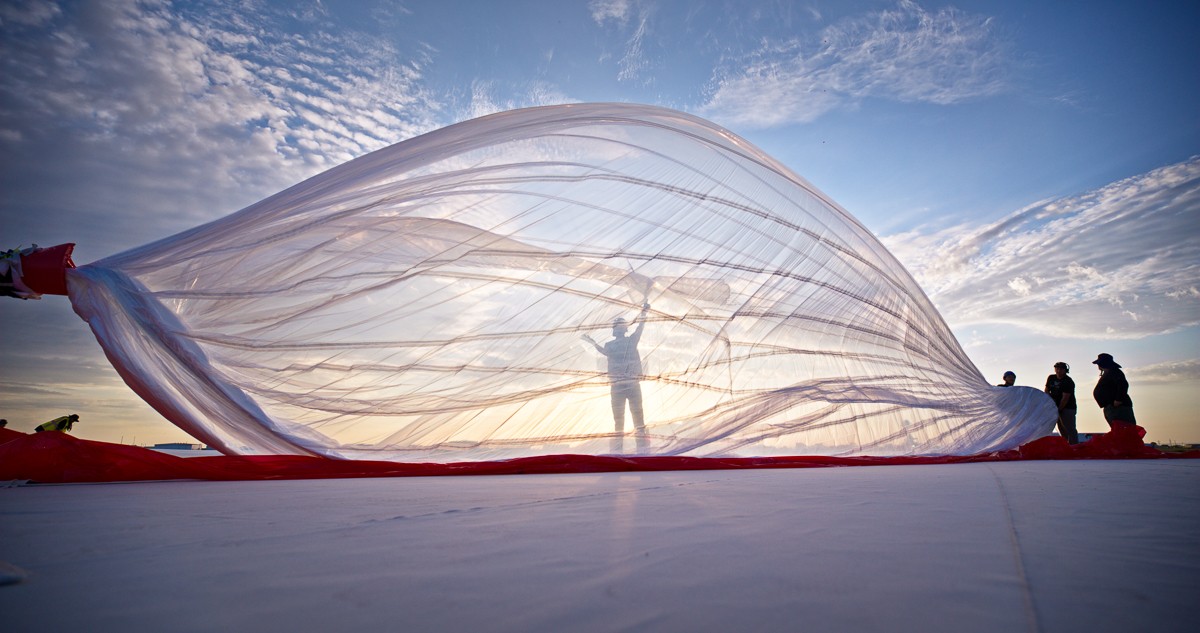
The SPEED system uses a two-stage flight configuration carried to the stratosphere by a high-altitude balloon. Before capsule separation, the complete system has a high ballistic coefficient, allowing it to accelerate rapidly after release and reach the high-subsonic or low-supersonic conditions required for the experiment. When the target condition is reached, the entry capsule is released from the aft portion of the projectile. The capsule then continues in free flight and decelerates through the supersonic, transonic, and subsonic regimes until reaching terminal velocity. This sequence permits the capsules dynamic response to be observed while its aerodynamic environment changes continuously during descent.
The capsule geometry and mass properties are scaled to produce dynamically representative flight conditions. Unlike tests conducted at a fixed Mach number or with externally imposed oscillations, SPEED allows the capsule to respond freely to the aerodynamic forces and moments encountered throughout its trajectory. The resulting motion can be measured across a broad range of flight conditions during a single descent.
Details of the balloon flight
Balloon launched on: 7/13/2026 at 13:15 UTC
Launch site: Artesia, New Mexico, US
Balloon launched by: World View Enterprises, Inc.
Balloon manufacturer/size/composition: Zero Pressure Balloon
Flight identification number: N138WV
End of flight (L for landing time, W for last contact, otherwise termination time): 7/13/2026 at 17:30 UTC (L)
Balloon flight duration (F: time at float only, otherwise total flight time in d:days / h:hours or m:minutes - ): 4 h 15 m
Landing site: 12 km SW of Hermosa, New México, US
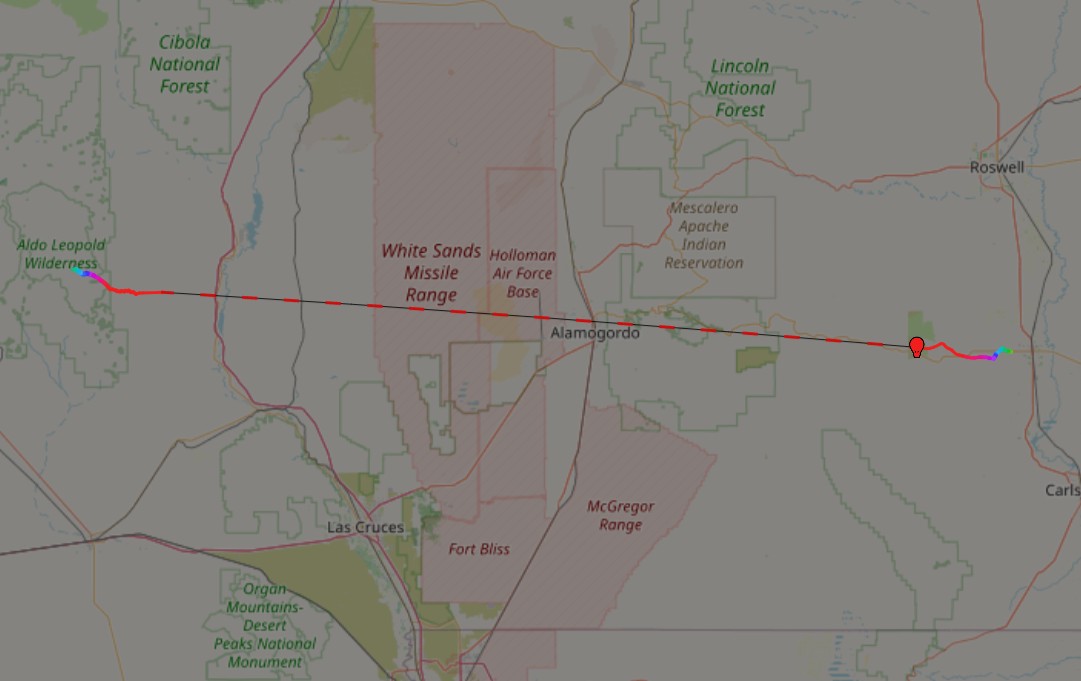
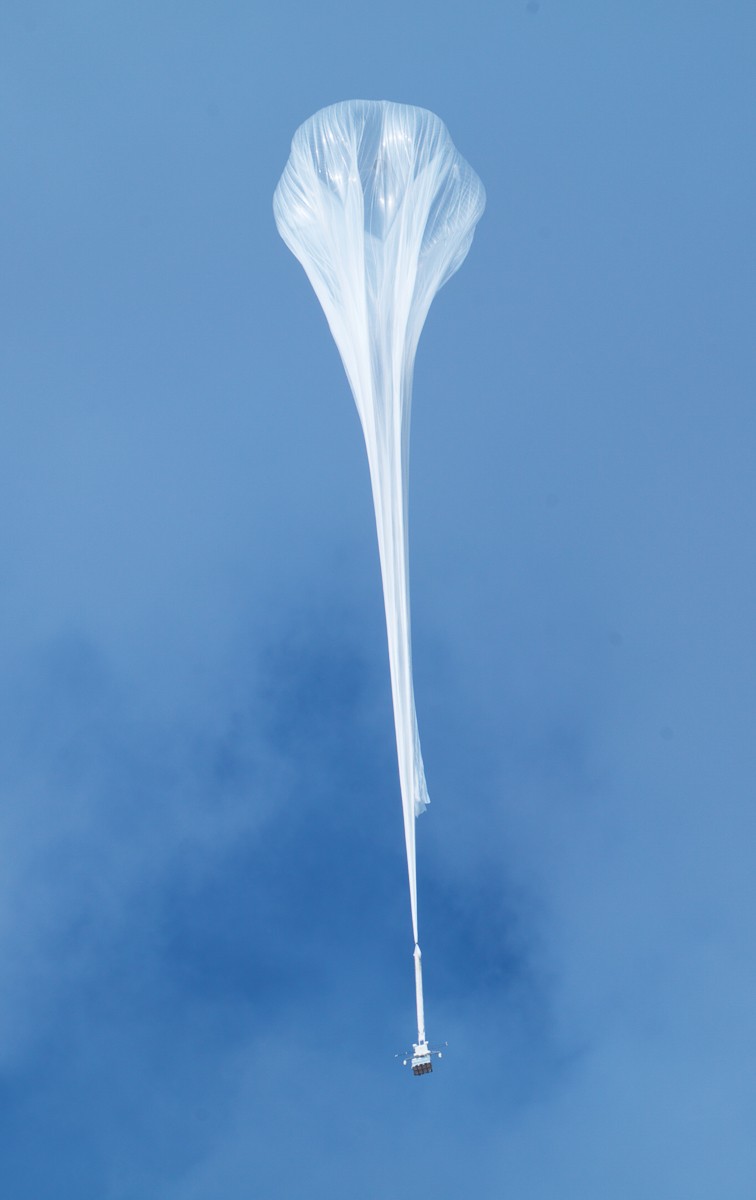
This was the first demonstration flight of the SPEED initiative. The mission was conducted through NASAs Flight Opportunities Program using a stratospheric balloon operated by World View Enterprises. The balloon was launched at 13:15 UTC from Artesia Municipal Airport, New Mexico. Following a nominal ascent, it reached an altitude of 120,000 ft and proceeded westward, carrying the balloon-payload system over the restricted airspace of White Sands Missile Range, where the test was conducted. After the test, the balloon continued its flight and landed approximately four hours after launch near Hermosa, New Mexico.
External references
Images of the mission
StratoCat is an independent, non-commercial project maintained to preserve and share the history of scientific and stratospheric ballooning. If you find the site useful, you can help keep it running with a small donation toward its operating costs. Every contribution, even the equivalent of a cup of coffee, is greatly appreciated.