
Purpose of the flight and payload description
The flight was part of a scientific experiment being carried out by the Research and Development Directorate of the Japanese Space Agency, JAXA to verify the general theory of relativity with high precision by mounting a laser with extremely high frequency stability on a balloon and comparing the optical frequency with that of a laser on the ground. As stated by Einstein's theory of general relativity a clock at a higher altitude ticks faster than one at a lower altitude.
By utilizing highly stable and high-precision frequency comparison technology, which has been rapidly developing in recent years, it will be possible to verify the general theory of relativity with an accuracy that exceeds that of verification using a positioning satellite orbit. After a first piggyback experiment conducted in 2023, it was confirmed that it is possible to determine the position of the balloon in real time with high precision, which is necessary to realize an optical link between the ground and the balloon. Based on that results, in 2024 was carried the second stage of the basic experiment: a high-precision positioning module and a light receiving unit were installed on a rubber balloon, and based on the real-time positioning results, infrared laser light was irradiated from the ground and the amount of light received by the balloon during flight was measured to evaluate the balloon tracking performance of the ground station.
This flight as part of the third stage of this preliminary experiment was focused on demonstrating technologies that improve the ground station's balloon tracking performance to enhance the quality of the optical link. This includes real-time correction of the transmitted laser direction using images captured during flight. To verify performance under varying atmospheric conditions, a first flight was performed in June 2025.
Details of the balloon flight
Balloon launched on: 8/23/2025 at 22:50 JST
Launch site: Multipurpose Aviation Research Field, Taiki-Cho, Hokkaido, Japan
Balloon launched by: Institute of Space and Astronautical Science (ISAS) / Japan Aerospace Exploration Agency (JAXA)
Balloon manufacturer/size/composition: Weather Balloon 11 mt diameter
Flight identification number: BS25-04
End of flight (L for landing time, W for last contact, otherwise termination time): 8/23/2025
Balloon flight duration (F: time at float only, otherwise total flight time in d:days / h:hours or m:minutes - ): ~ 2 h
Landing site: In the Pacific Ocean, 80 km ESE of Taiki, Japan
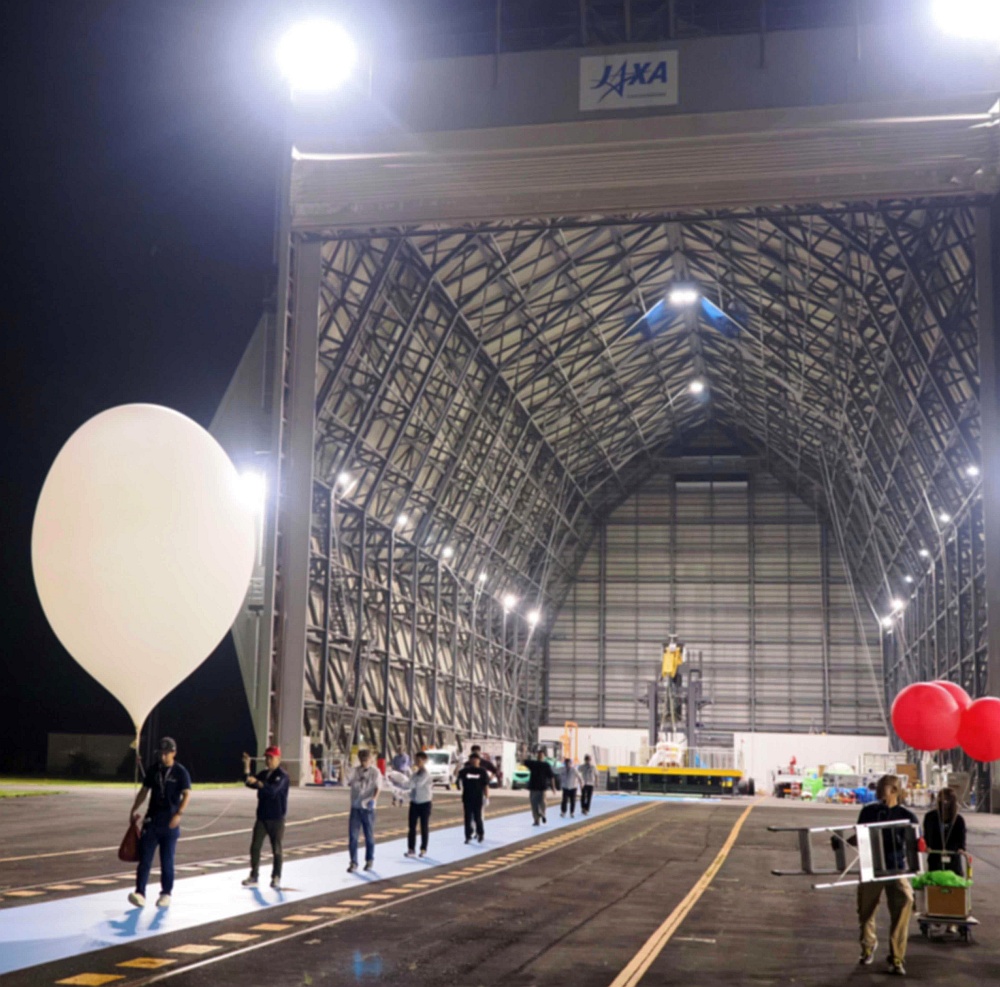
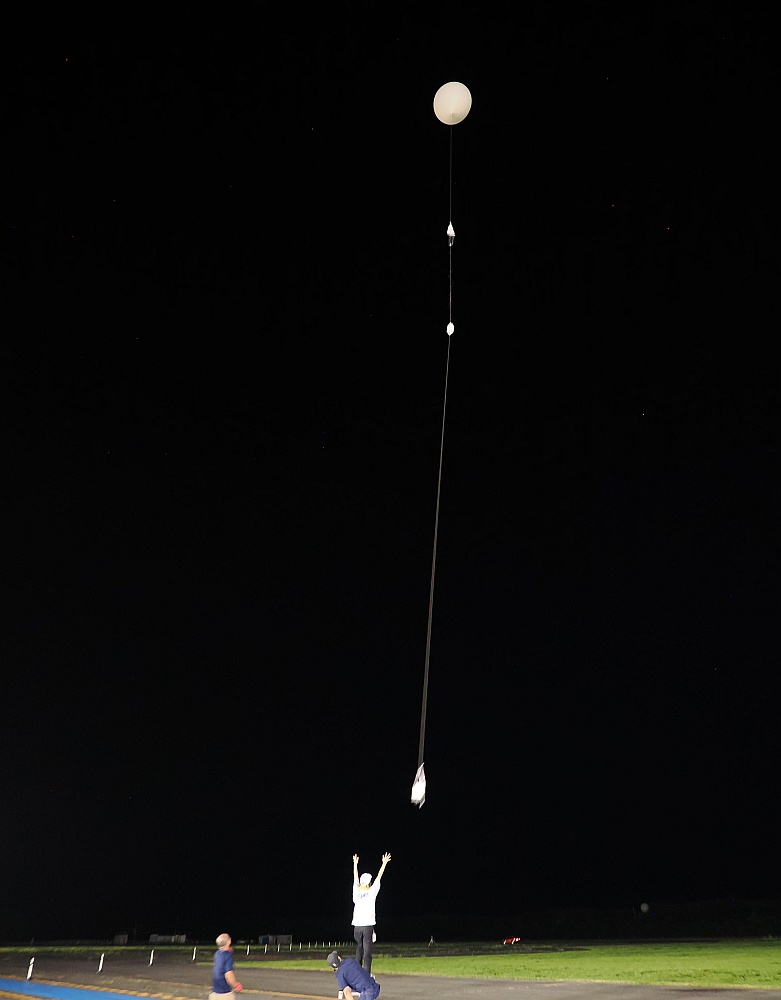
The rubber balloon of 11 meters of diameter was launched as mission BS25-04 from Taiki Aerospace Research Field at 22:50 jst (Japan Standard Time) on August 23th, 2025. After a nominal ascent at 370 meters per minute, it reached a maximum altitude of 25 km on the Pacific Ocean about 50 km ESE of Taiki. The total climb time was of one hour and eight minutes. Once the balloon reached that altitude the payload was jettisoned and slowly descended to the Pacific Ocean about 80 km ESE of Taiki.
External references
Images of the mission
StratoCat is an independent, non-commercial project maintained to preserve and share the history of scientific and stratospheric ballooning. If you find the site useful, you can help keep it running with a small donation toward its operating costs. Every contribution, even the equivalent of a cup of coffee, is greatly appreciated.