
Purpose of the flight and payload description
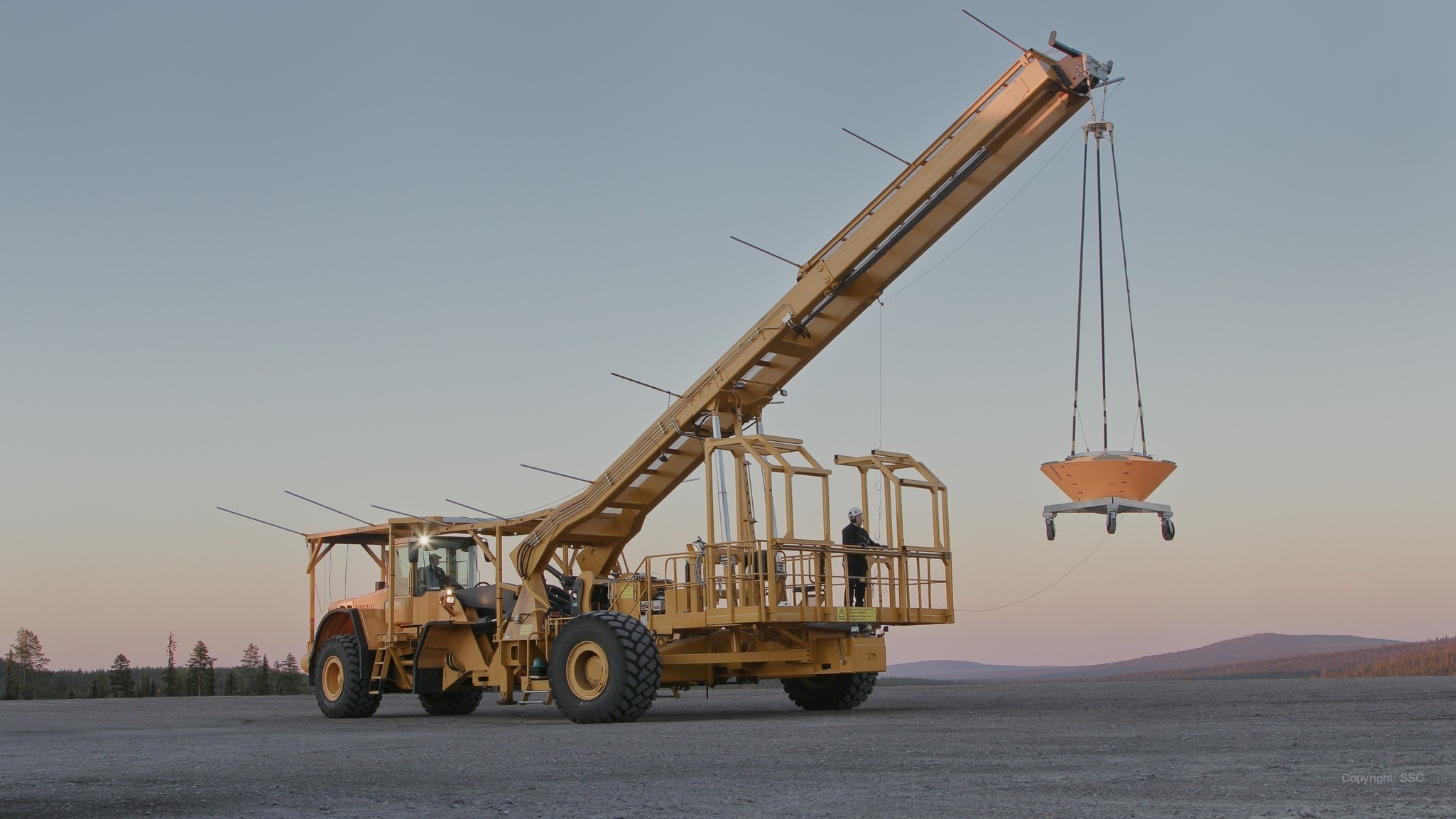
This balloon mission was part of the qualification and testing phase of the parachute system for ExoMars (Exobiology on Mars) mission, an astrobiology programme by the European Space Agency (ESA) and the Russian space agency Roscosmos. The goals of ExoMars are to search for signs of past life on Mars, investigate how the Martian water and geochemical environment varies, investigate atmospheric trace gases and their sources and by doing so demonstrate the technologies for a future Mars sample-return mission. The first part of the programme was a mission launched in 2016 that placed the Trace Gas Orbiter into Mars orbit and released the Schiaparelli EDM lander. The orbiter is operational but the lander crashed on the planet's surface.
The second part of the programme was planned to launch in July 2020, when the Kazachok lander would have delivered the Rosalind Franklin rover on the surface, supporting a science mission that was expected to last into 2022 or beyond. The descent module requires two main parachutes -each with its own pilot chute for extraction- to help slow it down as it plunges through the martian atmosphere. The 15 meters-wide first stage main parachute will open while the descent module is still travelling at supersonic speeds, and the 35 meters-wide second stage main parachute is deployed once at subsonic speeds. Following separation of the parachutes, the speed must be suitable for the braking engines to safely deliver the landing platform and the rover onto the surface of Mars.
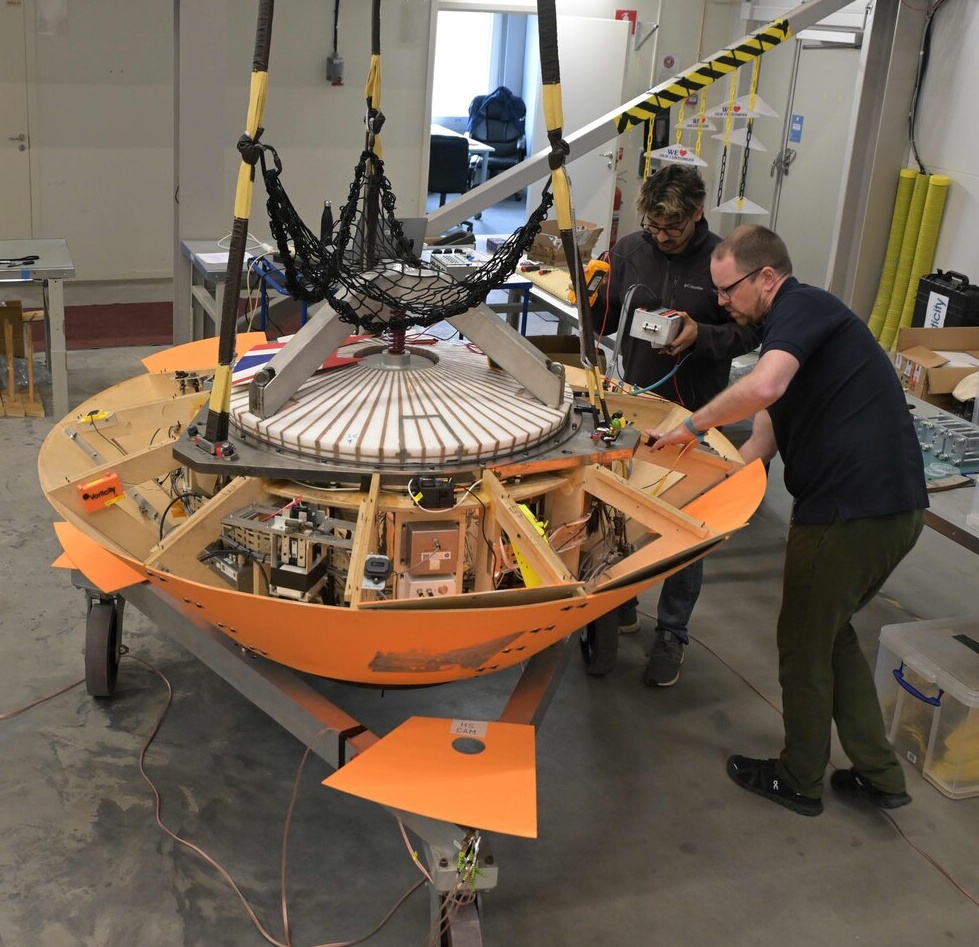
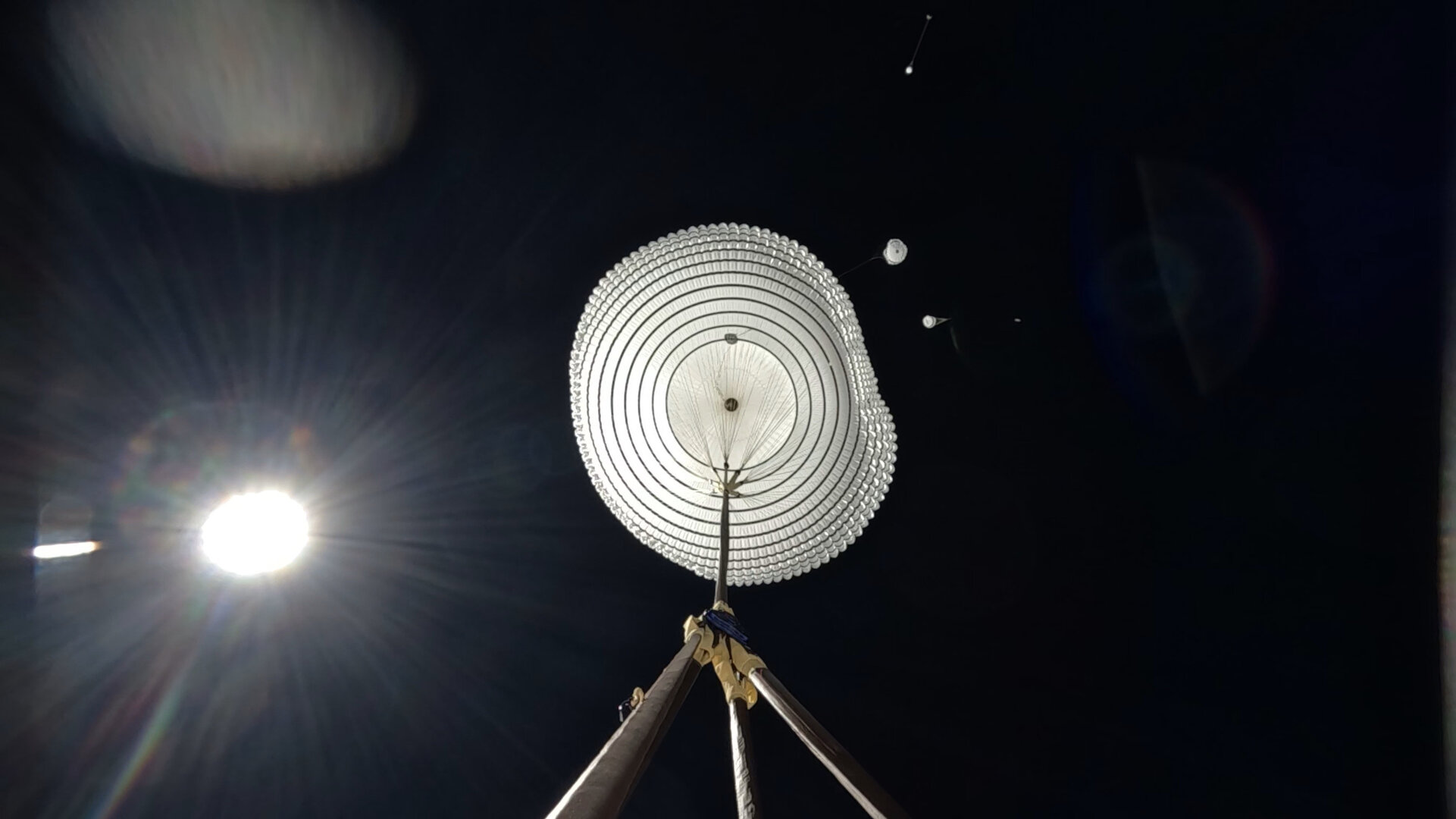
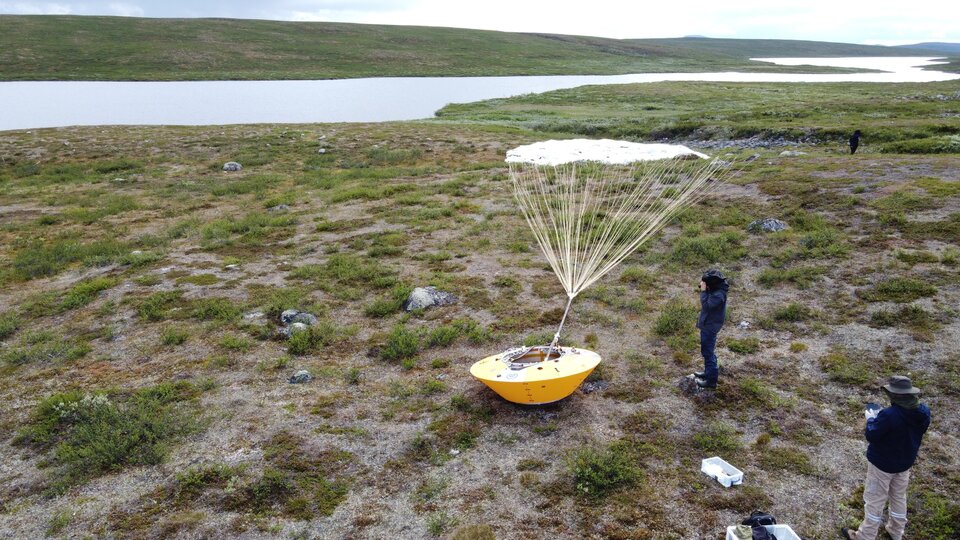
To test the performance of the parachutes before the flight, the UK-based company Vorticity Systems was selected as technical consultant under contract with Thales Alenia Space. A special capsule was built by the firm to perform the drop tests of the parachutes, first from low altitude using an helicopter and then from high altitude using a stratospheric balloon. These missions allowed to test the parachutes and deployment sequence with the same gravitational acceleration and atmospheric density as they will experience on Mars.
After the firsts series was completed in 2019 some anomalies were found on the descending system. As a result on March 2020, it was announced that the second mission was being delayed to 2022 as a result of the problems with the parachutes, which could not be resolved in time for the launch window. After studying the problem and some modifications, a new series of parachute tests were needed which were performed in Oregon during 2020 and from Sweden in 2021 and obtained complete qualification, however the mission was put to a halt due to Russia's invasion of Ukraine in 2022. In April 2024, the mission has received new funding to restart construction and delivery of the Rosalind Franklin rover and NASA has agreed to provide the launch, currently scheduled for late 2028 and arrival to Mars two years later.
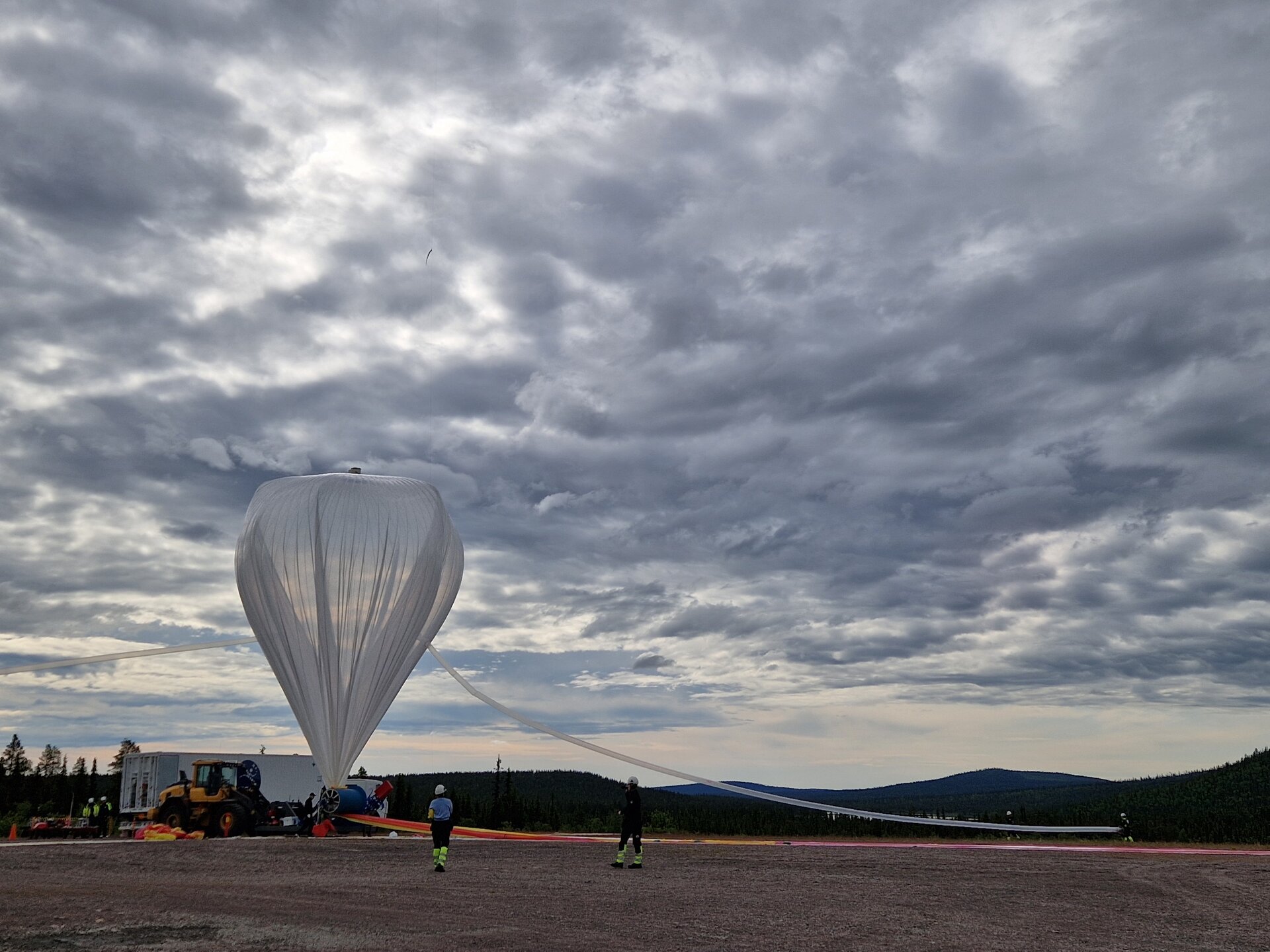
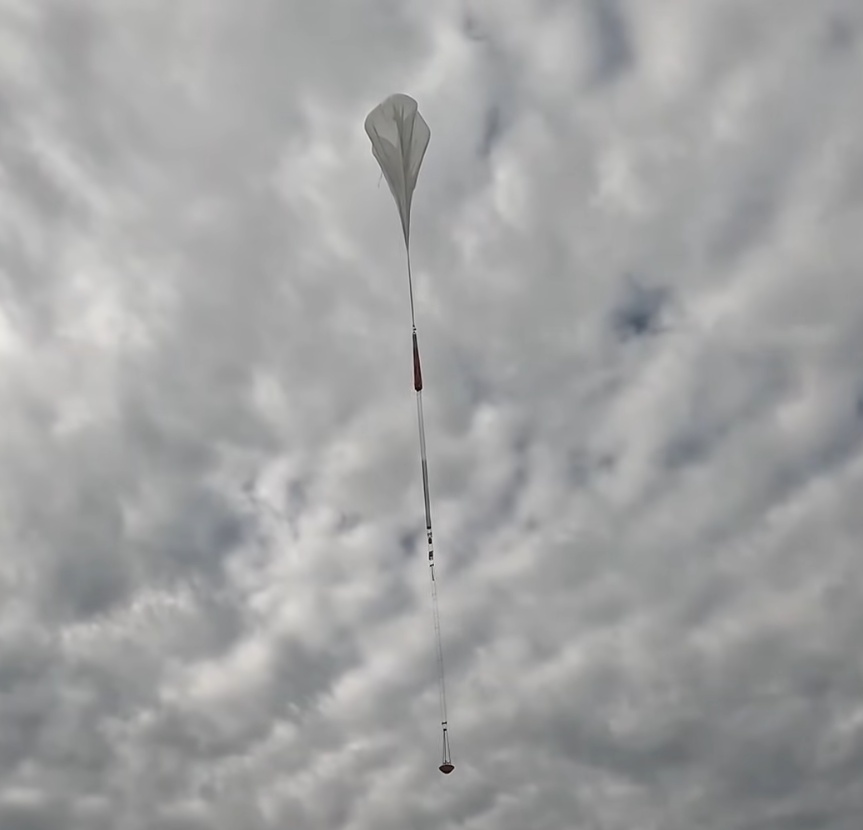
The new balloon-borne drop test performed in Sweden in 2025 was to confirm the readiness of the braking system for Mars, and to verify that the parachutes were still performing as expected after the long storage.
Video footage of the campaign preparations, launch and deployment
Details of the balloon flight
Balloon launched on: 7/7/2025 at 7:24 UTC
Launch site: European Space Range, Kiruna, Sweden
Balloon launched by: Swedish Space Corporation (SSC)
Balloon manufacturer/size/composition: Zero Pressure Balloon
End of flight (L for landing time, W for last contact, otherwise termination time): 7/7/2025
Balloon flight duration (F: time at float only, otherwise total flight time in d:days / h:hours or m:minutes - ): ~ 4 h
External references
- ESA Recertifies ExoMars Parachutes After Years in Storage European Spaceflight website
- ExoMars parachutes ready for martian deployment ESA website
- Testing Mars parachutes from the edge of Space SSC website
Images of the mission
StratoCat is an independent, non-commercial project maintained to preserve and share the history of scientific and stratospheric ballooning. If you find the site useful, you can help keep it running with a small donation toward its operating costs. Every contribution, even the equivalent of a cup of coffee, is greatly appreciated.