
Purpose of the flight and payload description
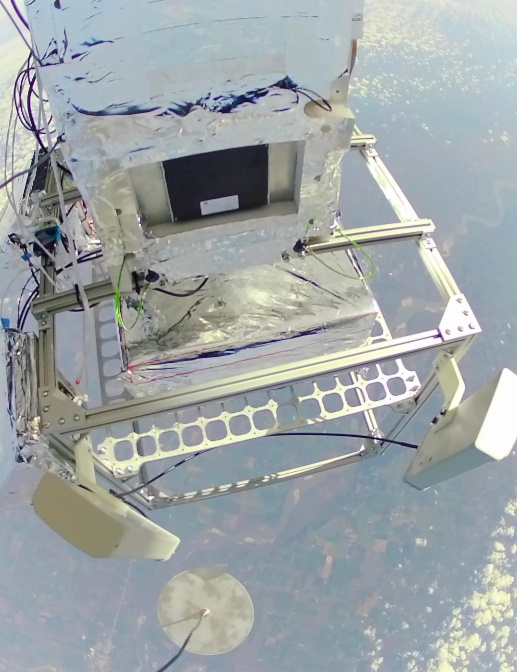
The objective of the flight was to conduct the first real-world test of a chip-sized accelerometer developed by researchers at the UCLA Samueli School of Engineering to enhance navigation precision for small spacecraft operating beyond low Earth orbit.
Since spacecraft in these regions cannot rely on GPS, they depend on inertial navigation systems that use accelerometers to calculate position, velocity, acceleration, and orientation. The UCLA team designed a miniature accelerometer capable of providing highly precise measurements with low noise, which could significantly improve navigation accuracy.
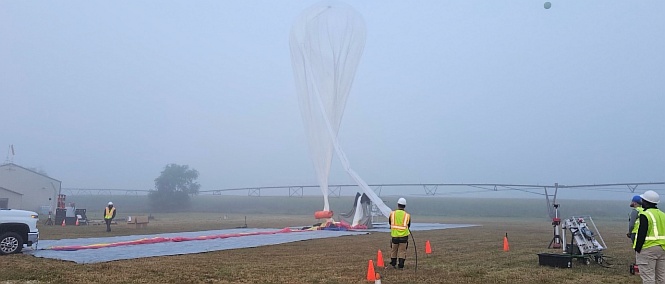
The balloon flight, supported by NASA's Flight Opportunities program, provided the opportunity to validate whether the device could accurately track position and orientation during suborbital flight conditions. The test also allowed the researchers to assess performance in a relevant environment and refine the design accordingly.
In the long term, this technology aims to support future applications such as NASA's LunaNet architecture, which will expand communication and navigation networks around the Moon and in cislunar space.
Details of the balloon flight
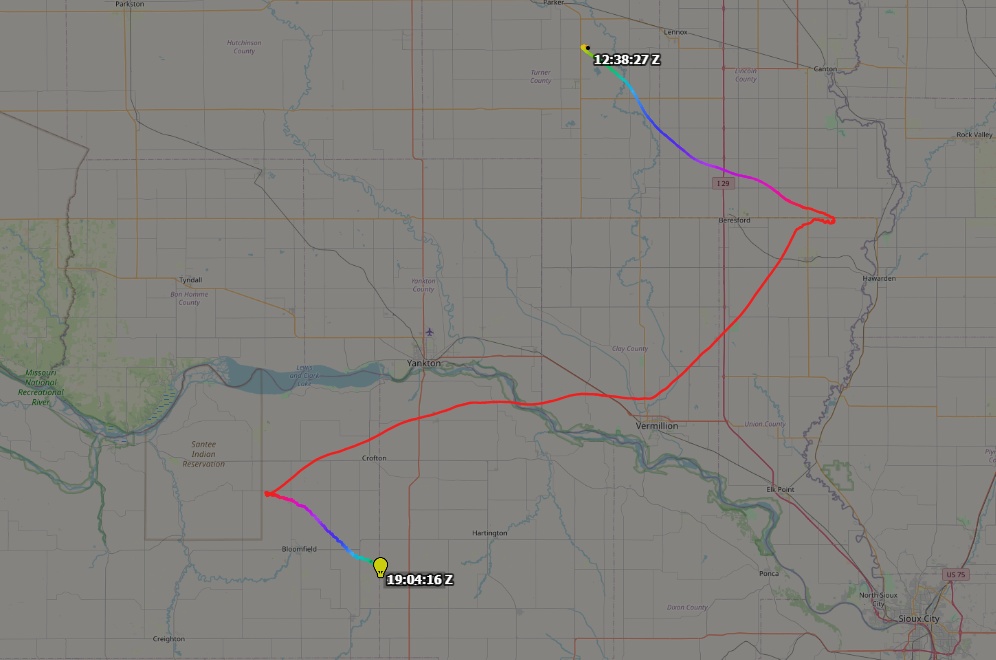
Balloon launched on: 9/10/2025 at 12:38 UTC
Launch site: Hurley, South Dakota, US
Balloon launched by: Aerostar
Balloon manufacturer/size/composition: Zero Pressure Balloon
Flight identification number: HBAL775
End of flight (L for landing time, W for last contact, otherwise termination time): 9/10/2025 at 19:04 UTC (L)
Balloon flight duration (F: time at float only, otherwise total flight time in d:days / h:hours or m:minutes - ): 5 h 35 m
Landing site: SE of Bloomfield, Nebraska, US
External references
Images of the mission
StratoCat is an independent, non-commercial project maintained to preserve and share the history of scientific and stratospheric ballooning. If you find the site useful, you can help keep it running with a small donation toward its operating costs. Every contribution, even the equivalent of a cup of coffee, is greatly appreciated.