
Purpose of the flight and payload description
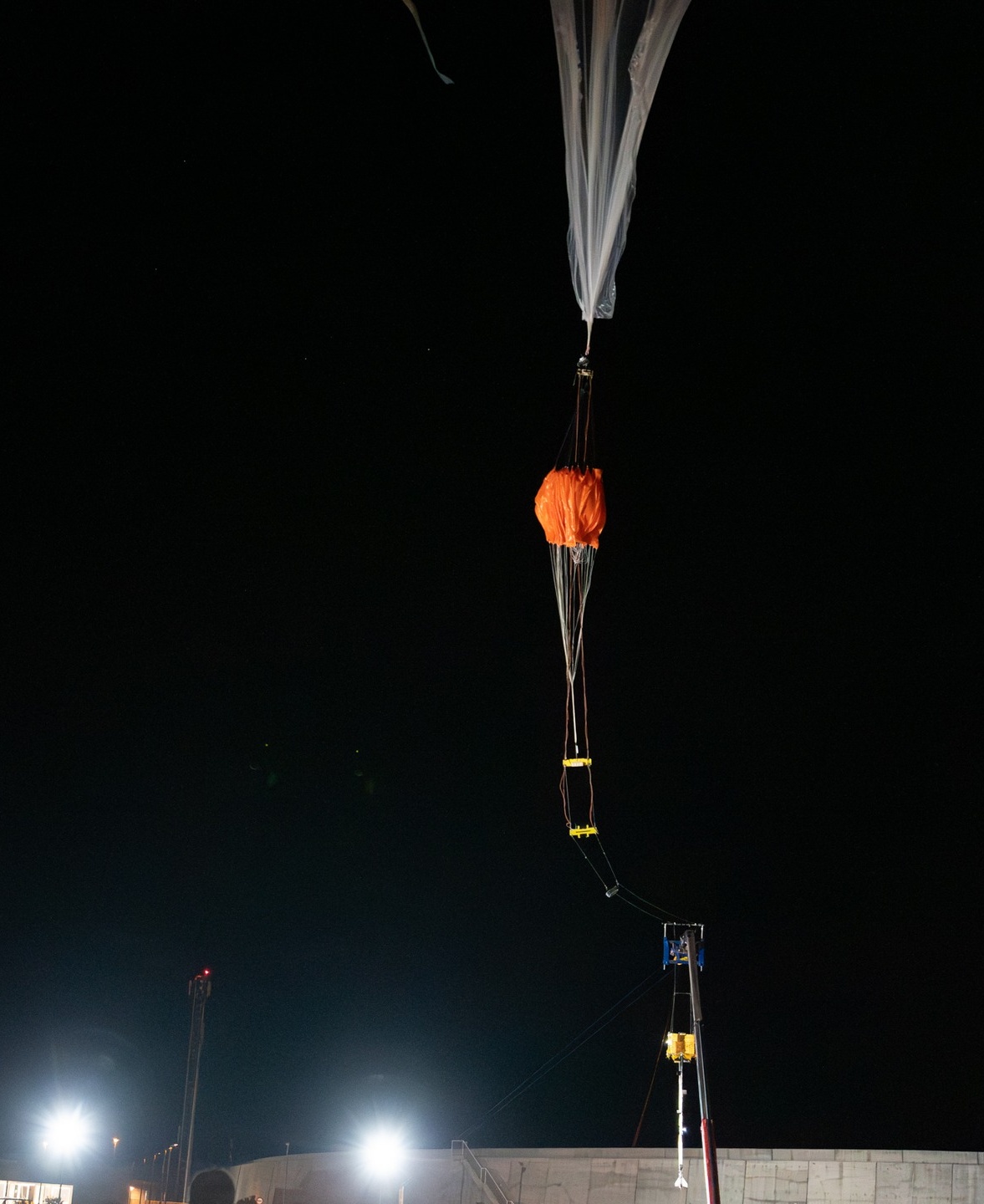
The so-called ROCKOON (Rocket-Balloon) technique allows small rockets to reach higher altitudes by launching them from a stratospheric balloon. The balloon ascends to the stratosphere, where the rocket is fired using an onboard timer, a pressure switch, or a telecommand. This innovative method was first used in 1952 by Dr. James Van Allen of the State University of Iowa.
The main advantage of the rockoon concept is that it enables a rocket to bypass the denser lower layers of the atmosphere without expending its own propulsion, allowing it to reach a higher apogee. Its limitation, however, is the inability to steer the balloon once released, making it impossible to precisely predict the rocket's launch direction or impact area. To mitigate this safety issue, historical rockoon missions were carried out from small vessels in open waters or, as in this case, from the shore of an island.
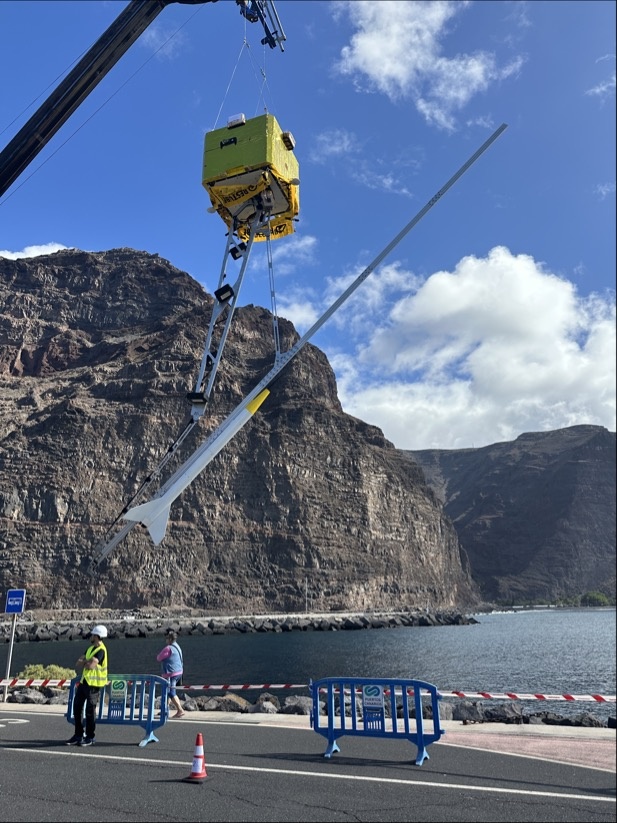
B2Space, the UK-Spanish aerospace firm based in Burgos which was responsible of this test, plans to use the rockoon concept in the future to deliver payloads of up to around 200 kg into low Earth orbit (LEO), making it suitable for small satellites such as CubeSats or nanosatellites. As part of its development program, this balloon mission carried a small solid-propellant rocket to high altitude and validated critical systems including telemetry, release mechanisms, and ignition under low-pressure conditions. The rocket was not fired during the test.
According to the company, this demonstration represents the most advanced test of its rockoon system to date and marks a significant step toward a future orbital launch.
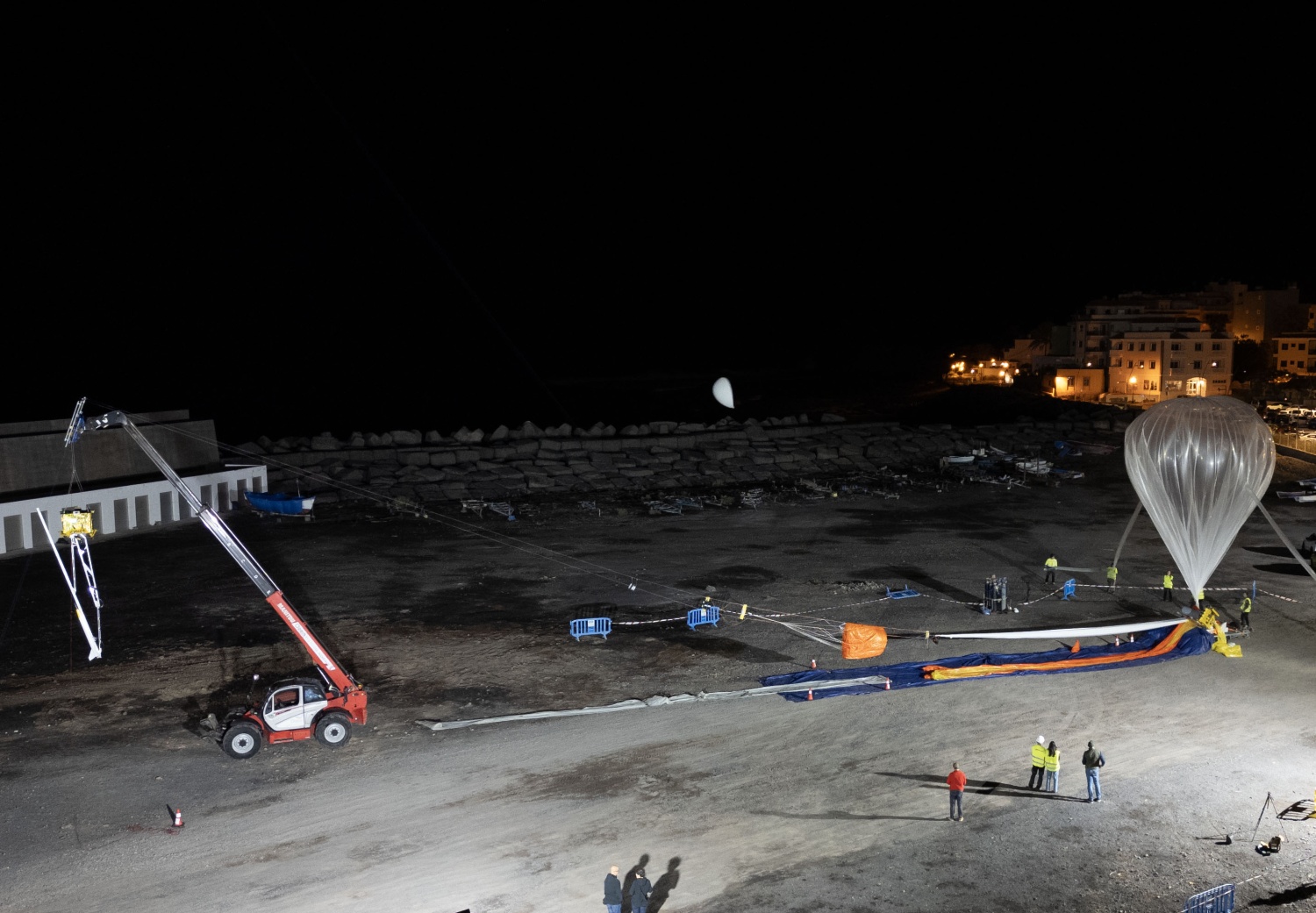
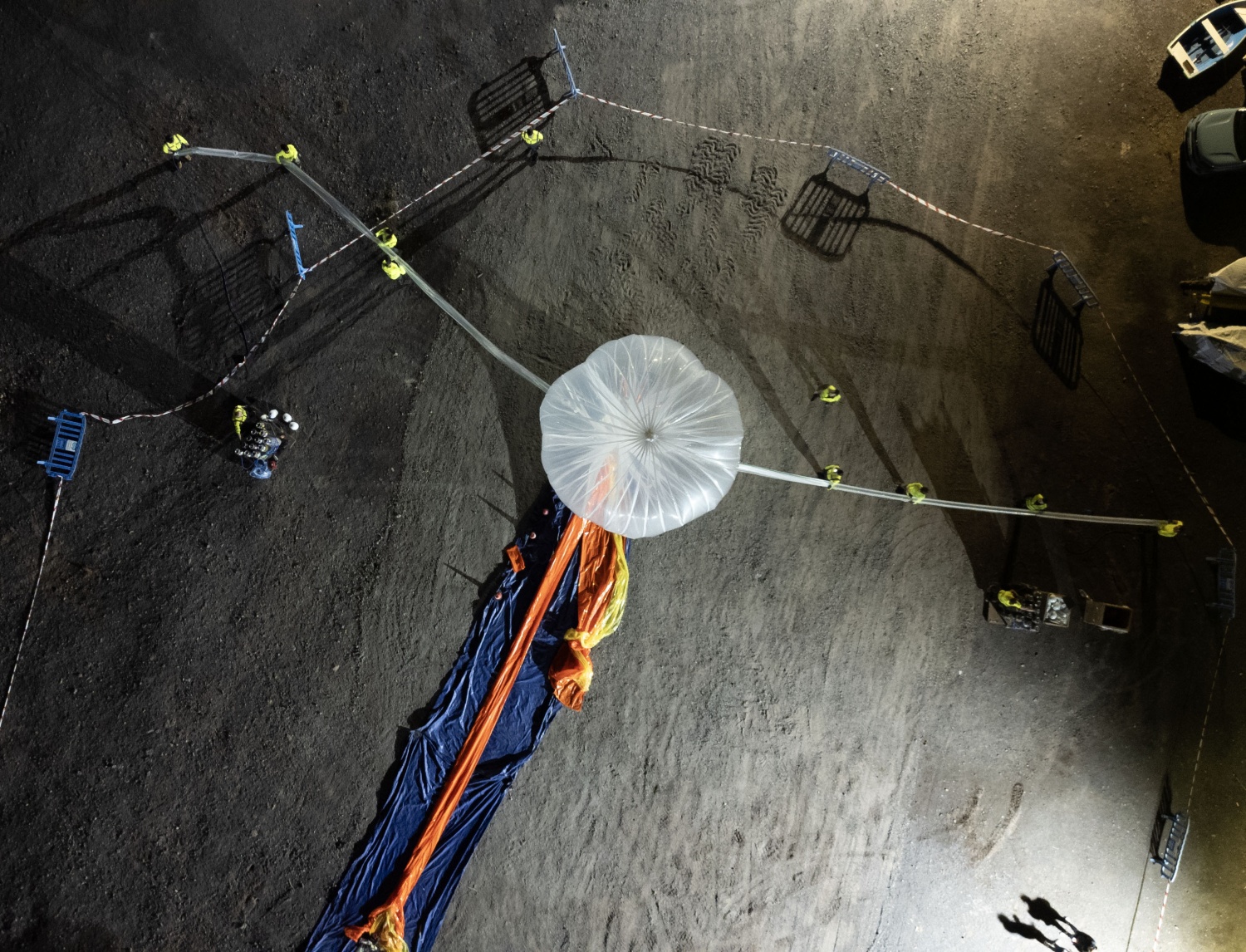
Video of the preparations of hte balloon launch
Details of the balloon flight
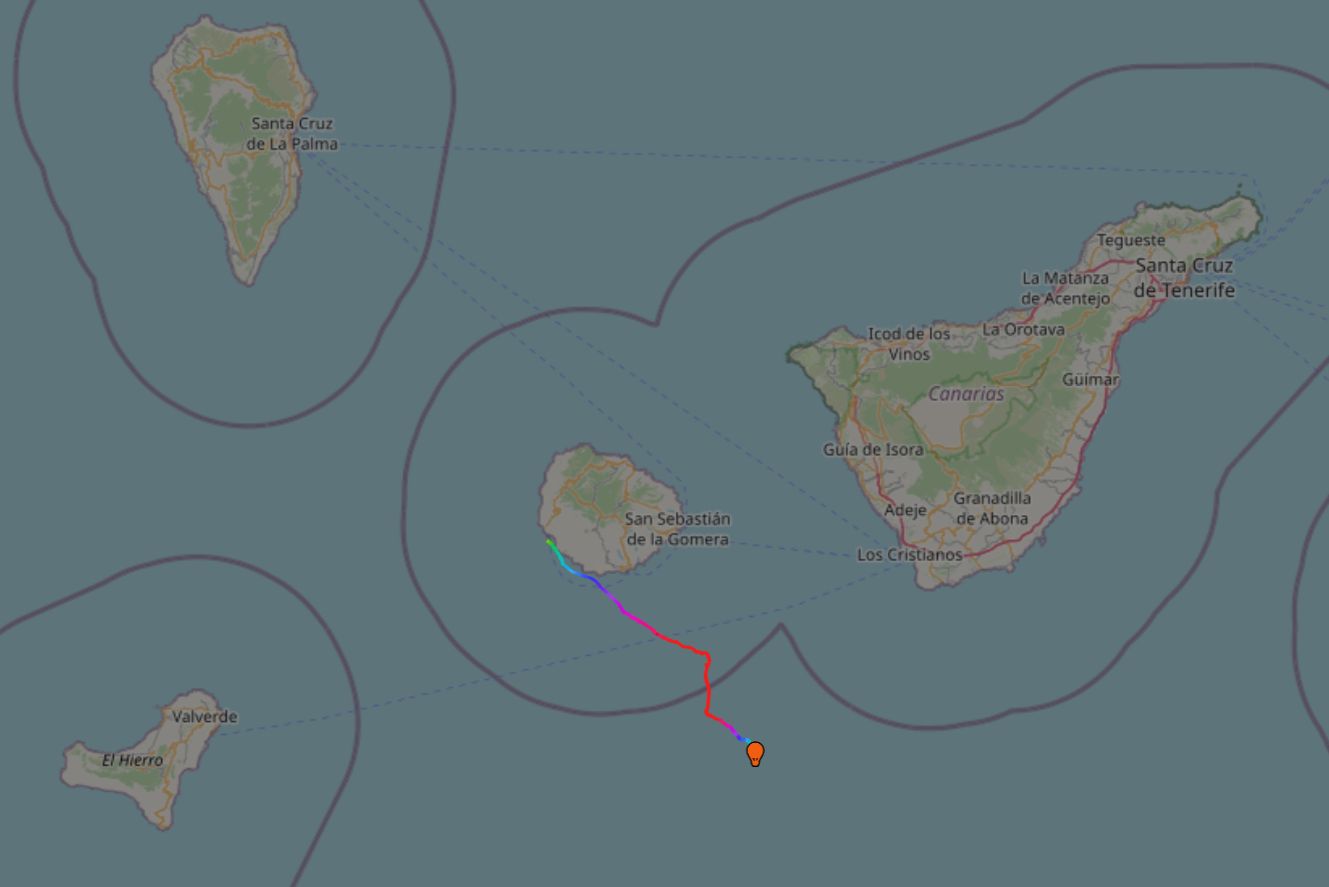
Balloon launched on: 11/17/2025 at 3:55 UTC
Launch site: Puerto de Vueltas, La Gomera, Islas canarias
Balloon launched by: B2Space
Balloon manufacturer/size/composition: Zero Pressure Balloon
End of flight (L for landing time, W for last contact, otherwise termination time): 11/17/2025 at 6:06 UTC
Balloon flight duration (F: time at float only, otherwise total flight time in d:days / h:hours or m:minutes - ): 2 h 10 m
Landing site: In the Atlantic Ocean, 37 km Sse from La Gomera
The balloon was launched at 4:00 UTC on November 17, 2025 from the Port of Vueltas in Valle Gran Rey, La Gomera, Canary Islands. After released the balloon followed a southernward path during the two hours it was aloft, ending its journey in a point 40 kilometers SSe from La Gomera. The payload was recovered by a ship from the Naval Service of the Civil Guard. Maximum altitude reached by the balloon was 21,5 km.
External references
Images of the mission
StratoCat is an independent, non-commercial project maintained to preserve and share the history of scientific and stratospheric ballooning. If you find the site useful, you can help keep it running with a small donation toward its operating costs. Every contribution, even the equivalent of a cup of coffee, is greatly appreciated.