
Purpose of the flight and payload description
BEXUS which stands for Balloon Experiments for University Students is a project part of the REXUS/BEXUs initiative that allows students from universities and higher education colleges across Europe and more recently also Canada to carry out scientific and technological experiments on stratospheric research balloons. The basic idea behind BEXUS is to provide an experimental space platform for students in different areas of interest such as atmospheric research, fluid physics, magnetic field, materials science, radiations physics, astrophysics, biology and also to serve as a platform for new technology demonstrations.
Each year, two balloons are launched from the European Space Range (ESRANGE) base near Kiruna, Sweden each carrying several experiments assembled on a medium-sized gondola (1.16 m x 1.16 m x 0.84 m). The total lifted-mass is approximately 300kg on each flight. With each payload weighing between 30 and 112 kg that means that 4 student experiments can be accomodated per gondola.
The first five flights of the program were carried out under sponsorship of the Swedish Space Corporation that offered available space on yearly technological flights carried out at ESRANGE. Since 2008, BEXUS is realised under a bilateral Agency Agreement between the German Aerospace Center (DLR) and the Swedish National Space Agency (SNSA). The Swedish share of the payload is made available to students from other European countries through a collaboration with the European Space Agency (ESA). EuroLaunch, a cooperation between ESRANGE and the Mobile Rocket Base (MORABA) of DLR, is the organism responsible for the campaign management and operations of the launch vehicles.
On each cycle of the initiative, experts from DLR, SSC, ZARM (Center of Applied Space Technology and Microgravity, University of Bremen) and ESA provide technical support to the student teams throughout the project. It begins with a Call for Proposals, followed by a condensed space project lifecycle, including typical design phases and reviews, culminating in the launch of the experiments and publication of the final reports.
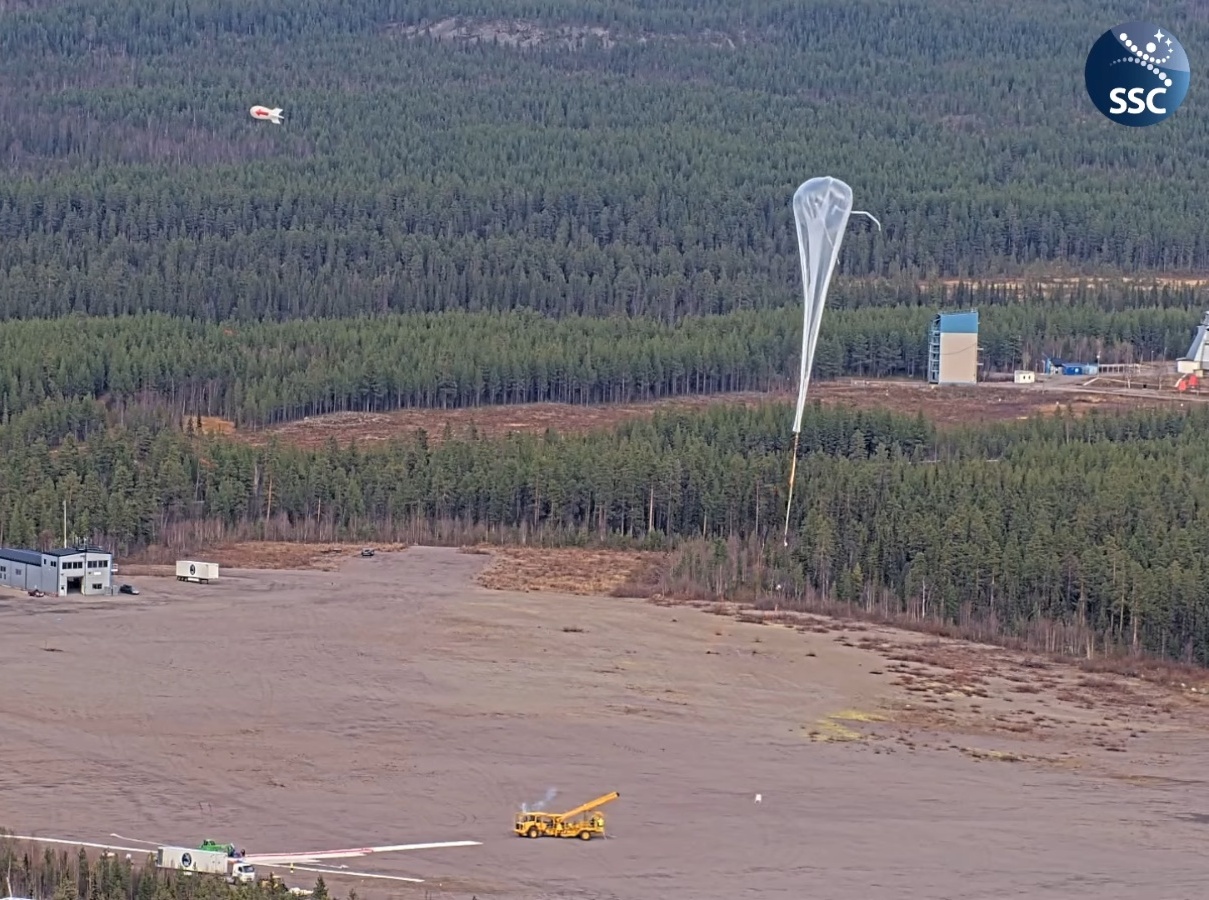
Video footage of the launch
Details of the balloon flight
Balloon launched on: 10/4/2024 at 13:47 UTC
Launch site: European Space Range, Kiruna, Sweden
Balloon launched by: Swedish Space Corporation (SSC)
Balloon manufacturer/size/composition: Zero Pressure Balloon
End of flight (L for landing time, W for last contact, otherwise termination time): 10/4/2024
The BEXUS 34 mission, carried five experiments covering membrane deployment, navigation and thermal management, radar-based space-object detection, and biological research under stratospheric conditions.
Project Svarog, developed by Imperial College London, investigated the deployment dynamics of large membrane structures in near-vacuum conditions. The experiment was designed to reproduce aspects of the deployment of large flexible structures such as solar sails, which must unfold reliably after launch despite their low mass and susceptibility to deformation. A large membrane was deployed from the balloon gondola while sensors recorded the behaviour of the structure. The measurements were used to study deployment dynamics, membrane motion and the interaction between the membrane and its supporting system under the low-pressure conditions encountered at high altitude.
RETINA (Real-time Experiment for Thermal management, Inertial Navigation and Attitude), from Sapienza University of Rome, demonstrated a combined system for thermal management, inertial navigation and attitude determination. The experiment integrated inertial sensors with thermal-control hardware and processing systems to monitor the gondola's motion and orientation while managing its thermal environment. During the flight, the system collected measurements from its sensors and evaluated its ability to determine attitude and navigation parameters in real time. The experiment investigated technologies applicable to autonomous spacecraft and other high-altitude platforms.
SMART (Satellite and Meteor Awareness from Radar Technology), developed by the University of Porto, demonstrated radar techniques for detecting and monitoring objects in the vicinity of the balloon. The system was intended to detect targets such as satellites and meteors using radar measurements. The experiment evaluated the operation of the radar from a stratospheric platform and investigated its ability to identify and characterize objects based on their reflected signals. The flight provided an opportunity to test the system in an environment with a substantially different geometry from conventional ground-based radar observations.
SpiCy (Stratospheric investigation of combinatory cyanobacterial biofilms), from Ludwig Maximilian University of Munich, studied cyanobacterial biofilms exposed to stratospheric conditions. The experiment investigated how communities of cyanobacteria respond to the combination of environmental stresses encountered at high altitude, including low pressure, low temperature, increased ultraviolet radiation and reduced atmospheric protection. Samples were exposed during the flight and subsequently evaluated to determine biological responses and changes in the biofilms.
STORMDUST (Science of TOxin migRation and Microbiology in DifficUlt STratospheric conditions), developed by Gdansk University of Technology, investigated microorganisms and toxin-related processes under stratospheric conditions. The experiment exposed biological samples to the high-altitude environment and examined their response to the combination of low temperature, reduced pressure, ultraviolet radiation and increased radiation exposure. The measurements were intended to investigate microbial behaviour and the migration or persistence of biologically relevant compounds under conditions that differ substantially from those at Earth's surface.
External references
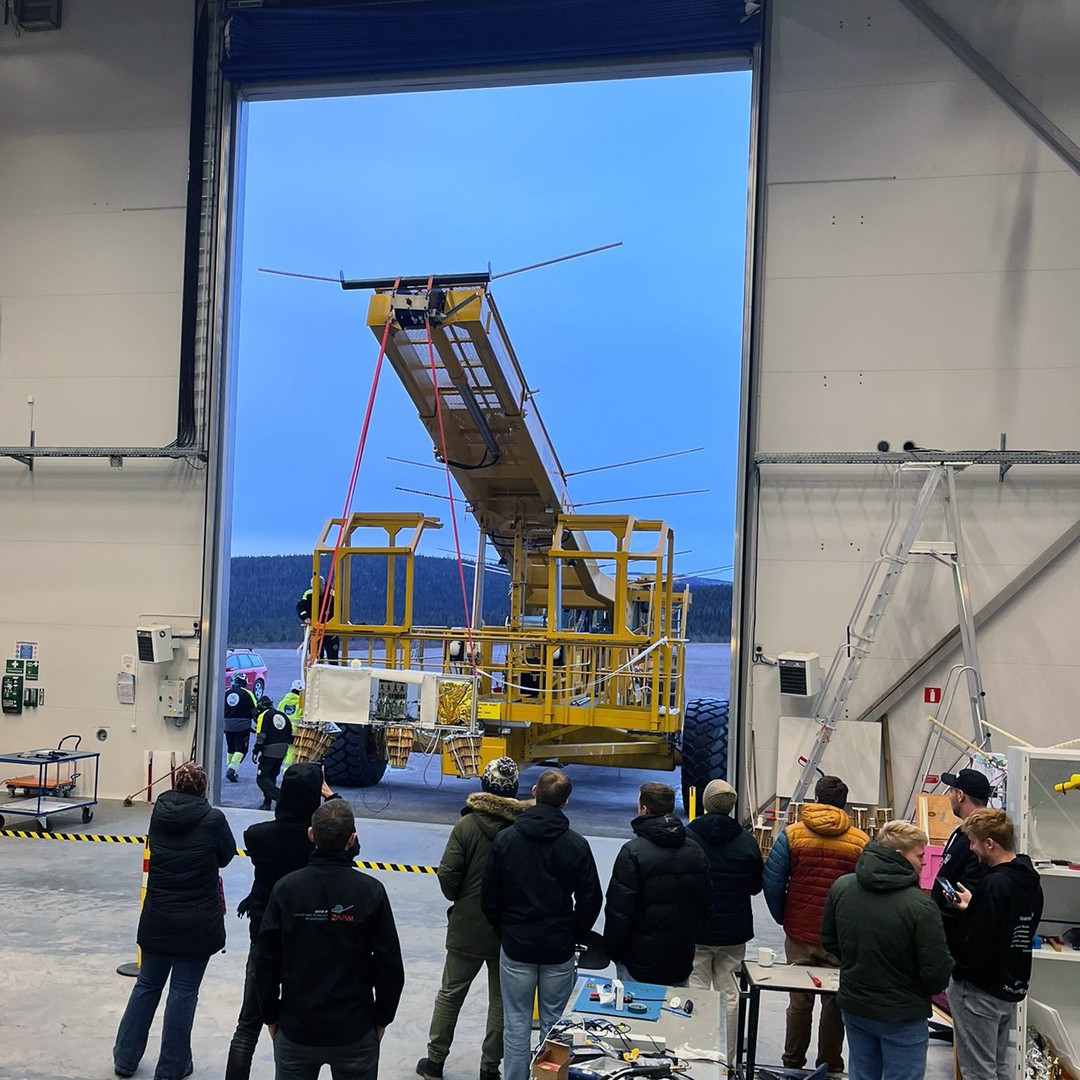
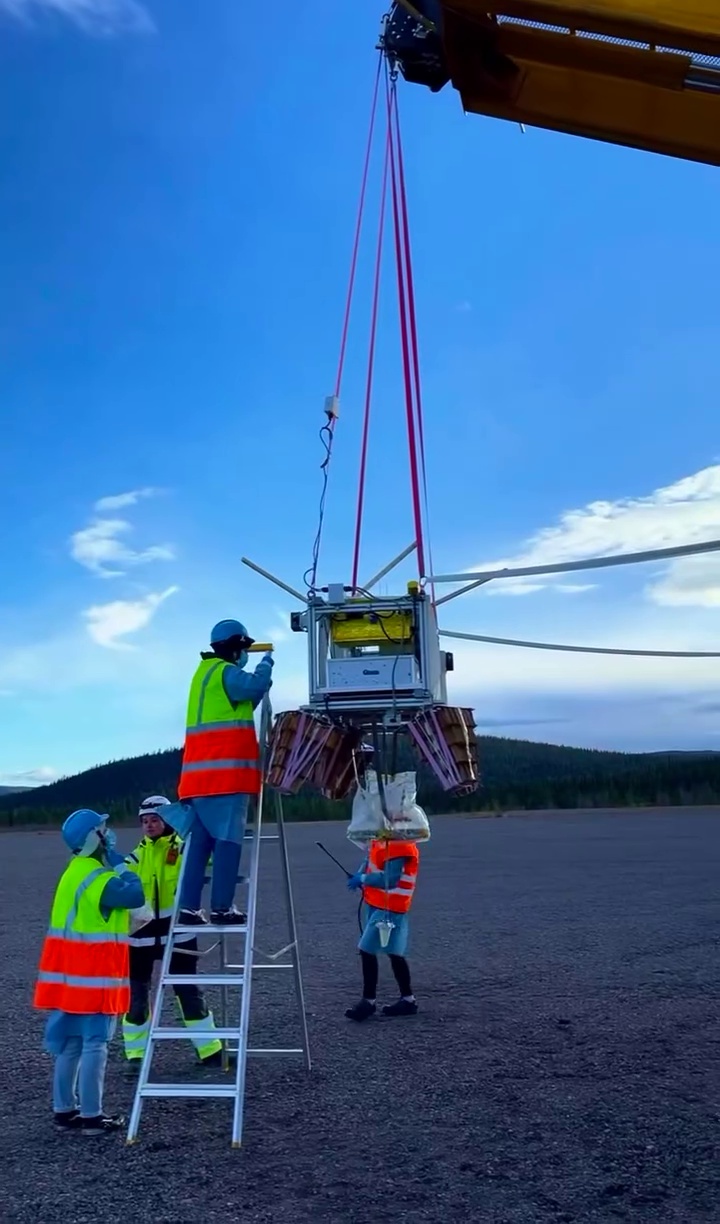
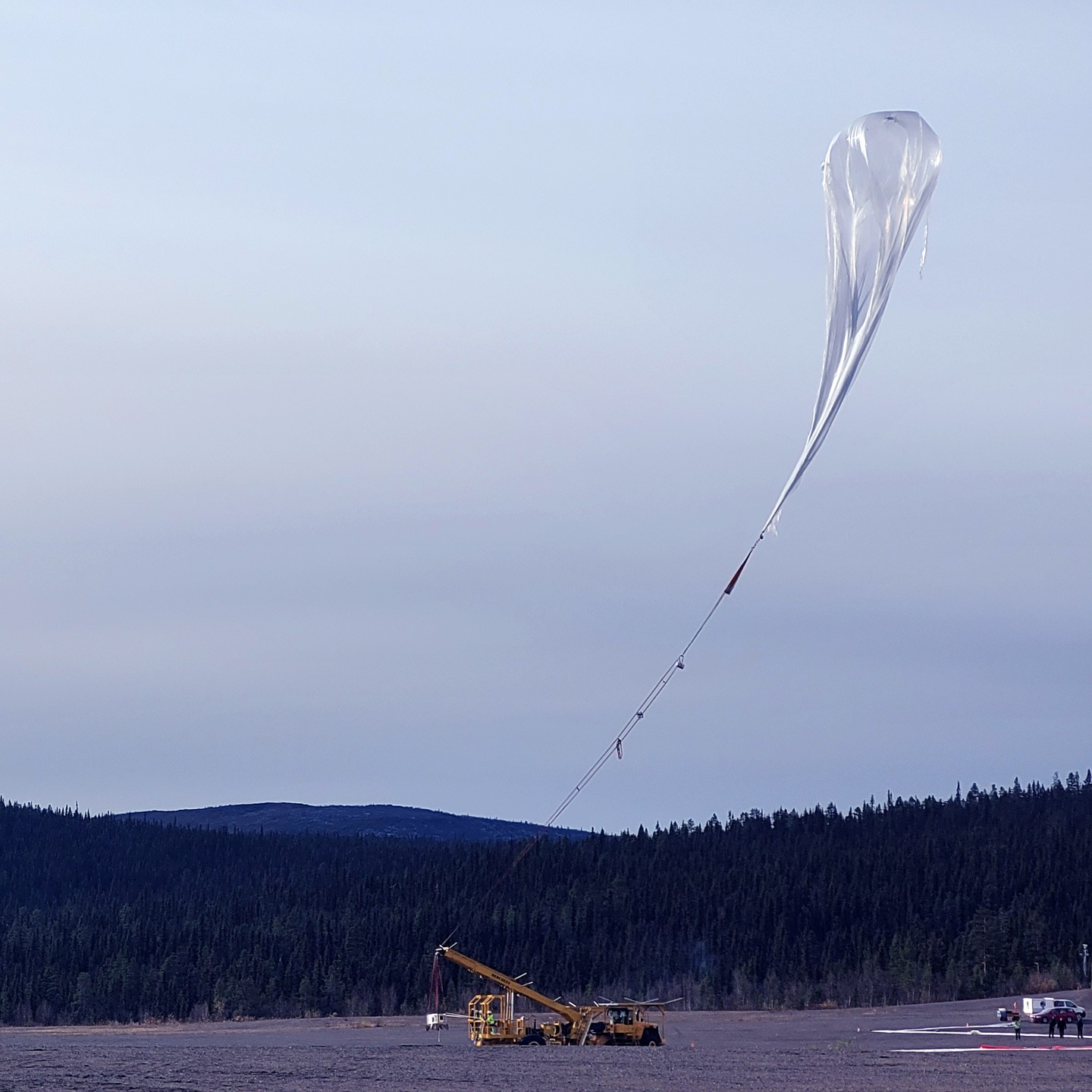
Images of the mission

StratoCat is an independent, non-commercial project maintained to preserve and share the history of scientific and stratospheric ballooning. If you find the site useful, you can help keep it running with a small donation toward its operating costs. Every contribution, even the equivalent of a cup of coffee, is greatly appreciated.