
Purpose of the flight and payload description
BEXUS which stands for Balloon Experiments for University Students is a project part of the REXUS/BEXUs initiative that allows students from universities and higher education colleges across Europe and more recently also Canada to carry out scientific and technological experiments on stratospheric research balloons. The basic idea behind BEXUS is to provide an experimental space platform for students in different areas of interest such as atmospheric research, fluid physics, magnetic field, materials science, radiations physics, astrophysics, biology and also to serve as a platform for new technology demonstrations.
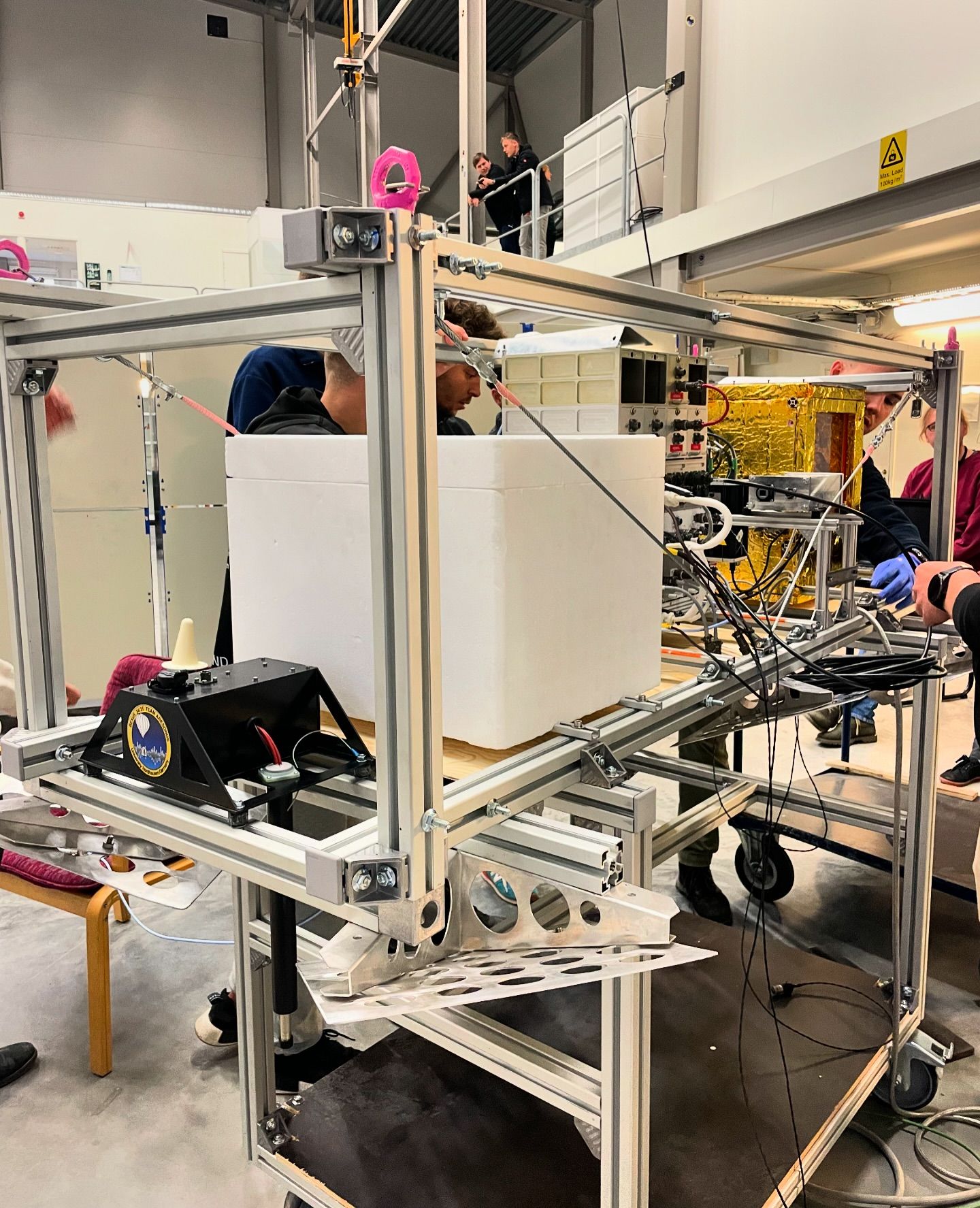
Each year, two balloons are launched from the European Space Range (ESRANGE) base near Kiruna, Sweden each carrying several experiments assembled on a medium-sized gondola (1.16 m x 1.16 m x 0.84 m). The total lifted-mass is approximately 300kg on each flight. With each payload weighing between 30 and 112 kg that means that 4 student experiments can be accomodated per gondola.
The first five flights of the program were carried out under sponsorship of the Swedish Space Corporation that offered available space on yearly technological flights carried out at ESRANGE. Since 2008, BEXUS is realised under a bilateral Agency Agreement between the German Aerospace Center (DLR) and the Swedish National Space Agency (SNSA). The Swedish share of the payload is made available to students from other European countries through a collaboration with the European Space Agency (ESA). EuroLaunch, a cooperation between ESRANGE and the Mobile Rocket Base (MORABA) of DLR, is the organism responsible for the campaign management and operations of the launch vehicles.
On each cycle of the initiative, experts from DLR, SSC, ZARM (Center of Applied Space Technology and Microgravity, University of Bremen) and ESA provide technical support to the student teams throughout the project. It begins with a Call for Proposals, followed by a condensed space project lifecycle, including typical design phases and reviews, culminating in the launch of the experiments and publication of the final reports.
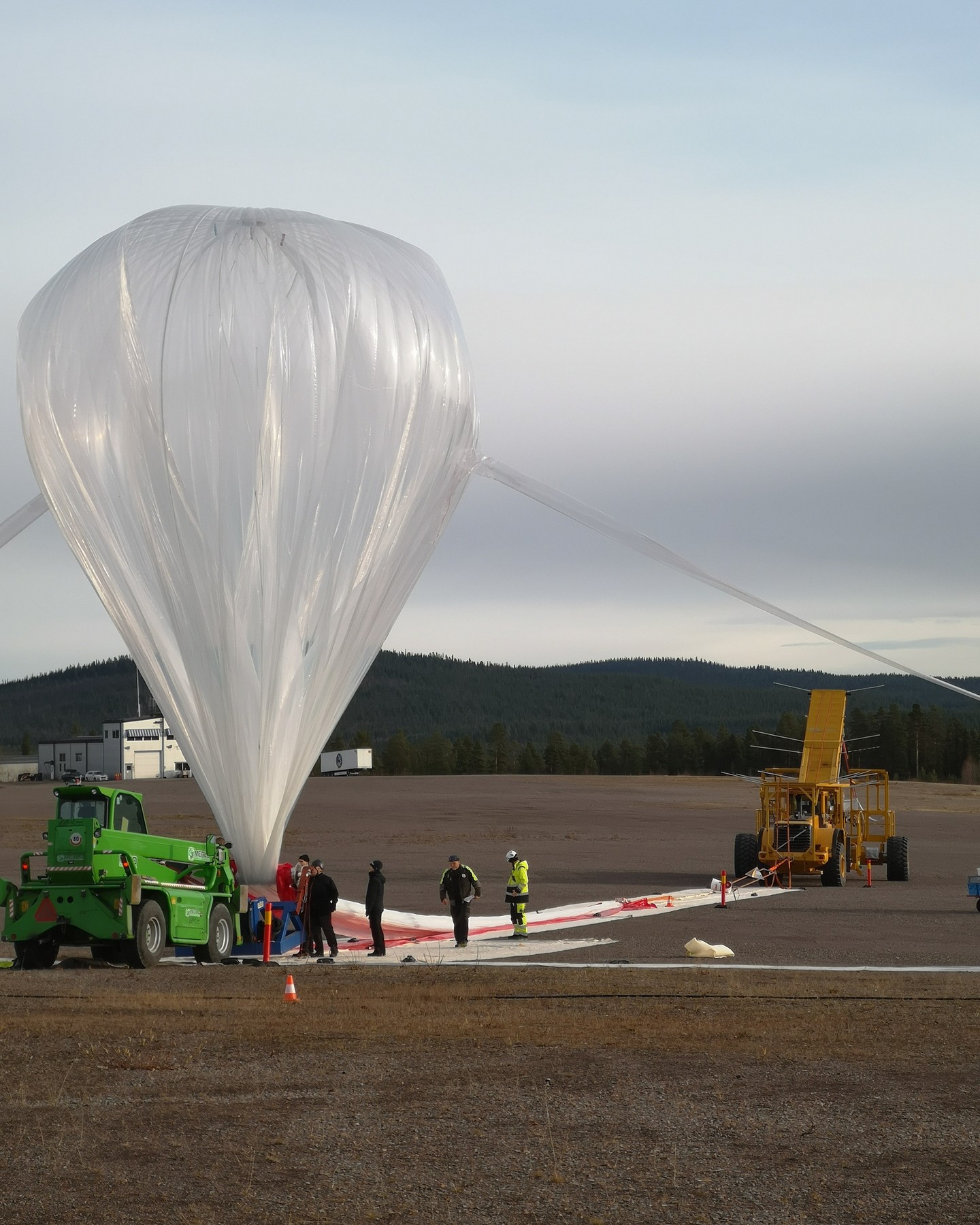
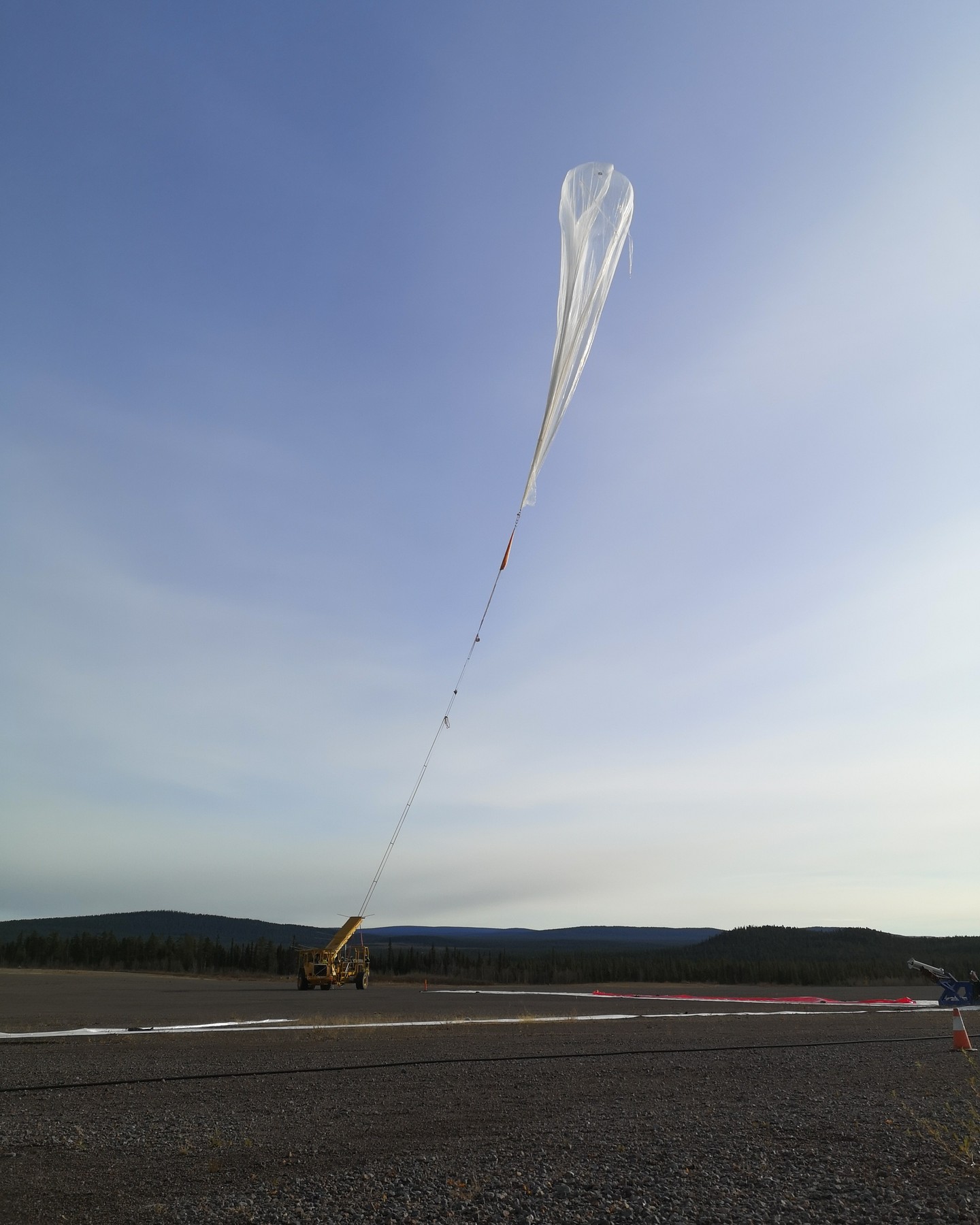
Video footage of the launch
Details of the balloon flight
Balloon launched on: 10/2/2024 at 7:53 UTC
Launch site: European Space Range, Kiruna, Sweden
Balloon launched by: Swedish Space Corporation (SSC)
Balloon manufacturer/size/composition: Zero Pressure Balloon
End of flight (L for landing time, W for last contact, otherwise termination time): 10/2/2024
The BEXUS 35 mission, carried four experiments investigating infrasound, atmospheric radiation, photovoltaic materials and hyperspectral imaging.
ARESONUS (Altus. Repetitio. Sonus), developed by Nordhausen University of Applied Sciences, investigated the propagation and measurement of infrasound in the stratosphere. Infrasound consists of acoustic waves below the normal range of human hearing and can travel over very long distances through the atmosphere. The experiment used a dedicated acoustic sensor system to detect and characterize low-frequency pressure variations during the balloon flight. Measurements were used to examine the stratospheric acoustic environment and assess the suitability of a balloon platform for detecting and studying aerosonic and infrasound signals at high altitude.
CHAOS (CHerenkov Atmospheric Observation System), from Kiel University, investigated Cherenkov radiation produced by high-energy particles entering and interacting with the atmosphere. When sufficiently energetic charged particles travel through a medium faster than the phase velocity of light in that medium, they generate a characteristic optical emission known as Cherenkov radiation. The experiment used optical detectors to observe these emissions and study the associated atmospheric particle events. The measurements provided information on high-energy radiation interactions in the atmosphere and on the performance of Cherenkov-detection techniques from a stratospheric balloon.
CURiE (Composite and photovoltaic Undergoing Radiation Effects), developed by the Warsaw University of Technology, investigated the effects of radiation on composite materials and photovoltaic technology. The experiment exposed photovoltaic and composite-material samples to the high-altitude radiation environment and monitored their behaviour during the flight. Measurements focused on changes in photovoltaic performance and material properties resulting from radiation exposure. The experiment was intended to provide data relevant to the development of photovoltaic systems and materials for applications in environments where radiation exposure is higher than at Earth's surface.
HEIMDAL (Hyperspectral Environmental Imagery Measurements Differentiating between Areas of Localized Specimens), from the University of Southern Denmark, demonstrated hyperspectral imaging for identifying and distinguishing surface features and localized targets. Unlike conventional cameras, hyperspectral sensors record information across numerous narrow wavelength bands, allowing materials and objects to be differentiated according to their spectral signatures. During the BEXUS flight, the instrument collected hyperspectral observations from the stratosphere and investigated the ability to distinguish different areas and specimens from altitude. The experiment evaluated the use of high-altitude balloon platforms for remote sensing applications and the acquisition of spectral information that can be used to identify or classify observed targets.
External references
Images of the mission

StratoCat is an independent, non-commercial project maintained to preserve and share the history of scientific and stratospheric ballooning. If you find the site useful, you can help keep it running with a small donation toward its operating costs. Every contribution, even the equivalent of a cup of coffee, is greatly appreciated.