
Purpose of the flight and payload description
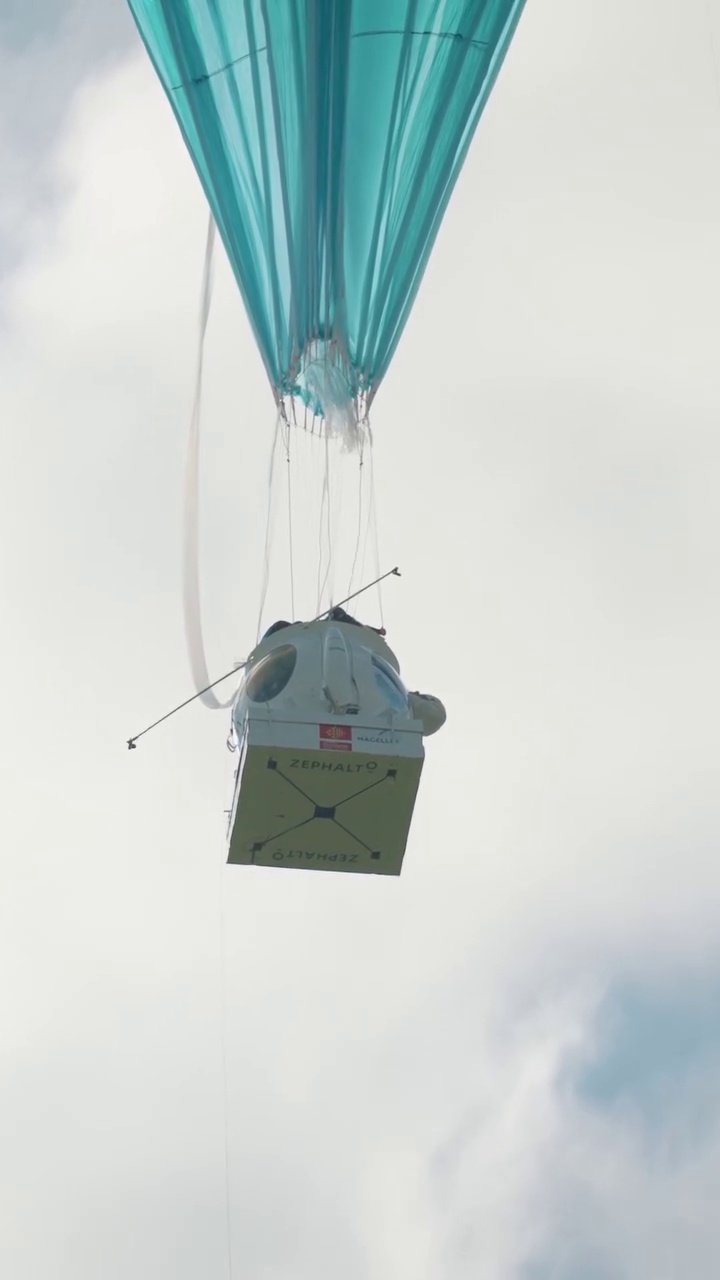
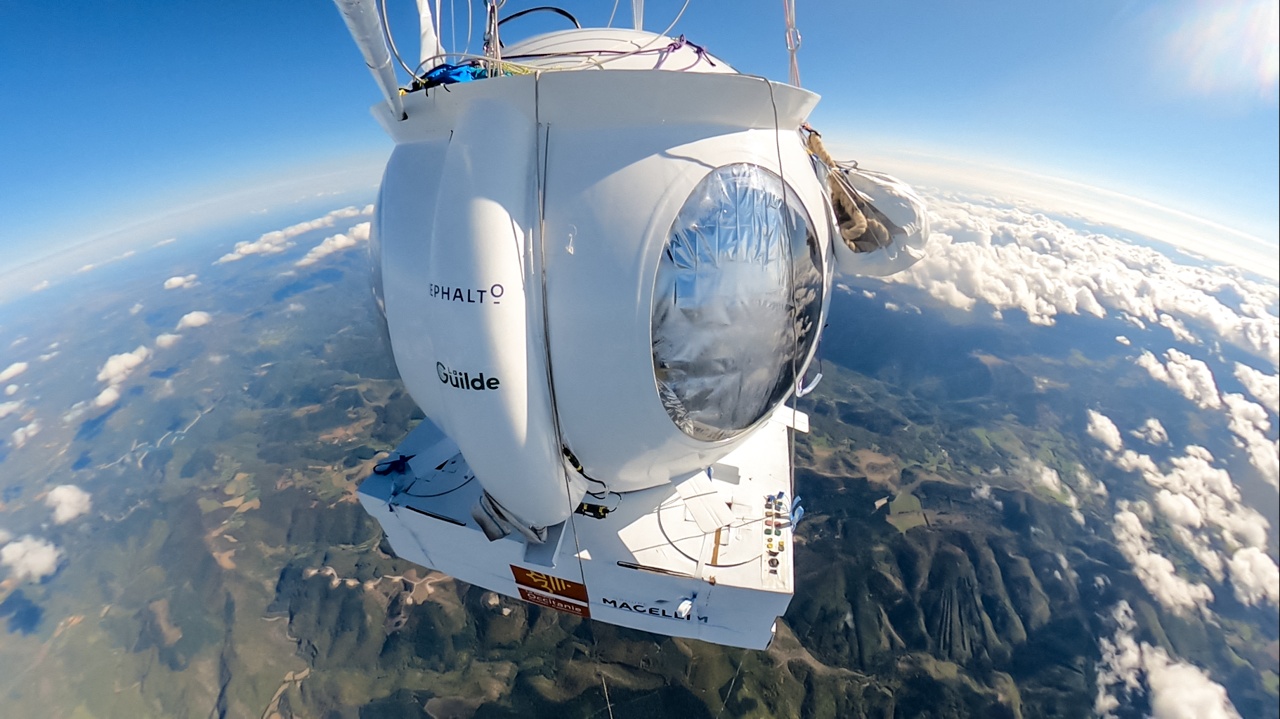
The LUCY is a prototype pressurized capsule developed by Zephalto, a French aerospace company founded in 2016 that is aiming in the near future to enable passengers to ascend to the stratosphere to observe Earth from over 25 kilometers altitude. The capsule was built under the supervision of Sebastien Roubinet, a well-known adventurer who has experience in carbon composite structures.
Objective of the flight was to validate the performance of its reusable pressurized capsule and high-altitude balloon systems under operational conditions. The mission was piloted by Vincent Farret d'Asties, founder of Zephalto, accompanied by his co-pilot Amaury Jarrousse.
Two scientific payloads were also onboard. The first, developed by CREST in Belgium, consisted of test panels incorporating thermochromic and photochromic materials that were exposed to near-stratospheric radiation flux and low-temperature conditions. The second, the AMULSE sampler from the GSMA CNRS laboratory at the University of Reims Champagne-Ardenne, executed automated in-situ collection and quantification of greenhouse gases (specifically CO2 and CH4) under reduced pressure.
Video footage of the launch operations and flight
Details of the balloon flight
Balloon launched on: 10/11/2024 at 11:30 UTC
Launch site: Albi Airfield, Le Sequestre, France
Balloon launched by: Zephalto
Balloon manufacturer/size/composition: Zero Pressure Balloon
Flight identification number: FWIND
End of flight (L for landing time, W for last contact, otherwise termination time): 10/11/2024 at 14:30 UTC
Balloon flight duration (F: time at float only, otherwise total flight time in d:days / h:hours or m:minutes - ): 3 h
Landing site: Near Liausson, France
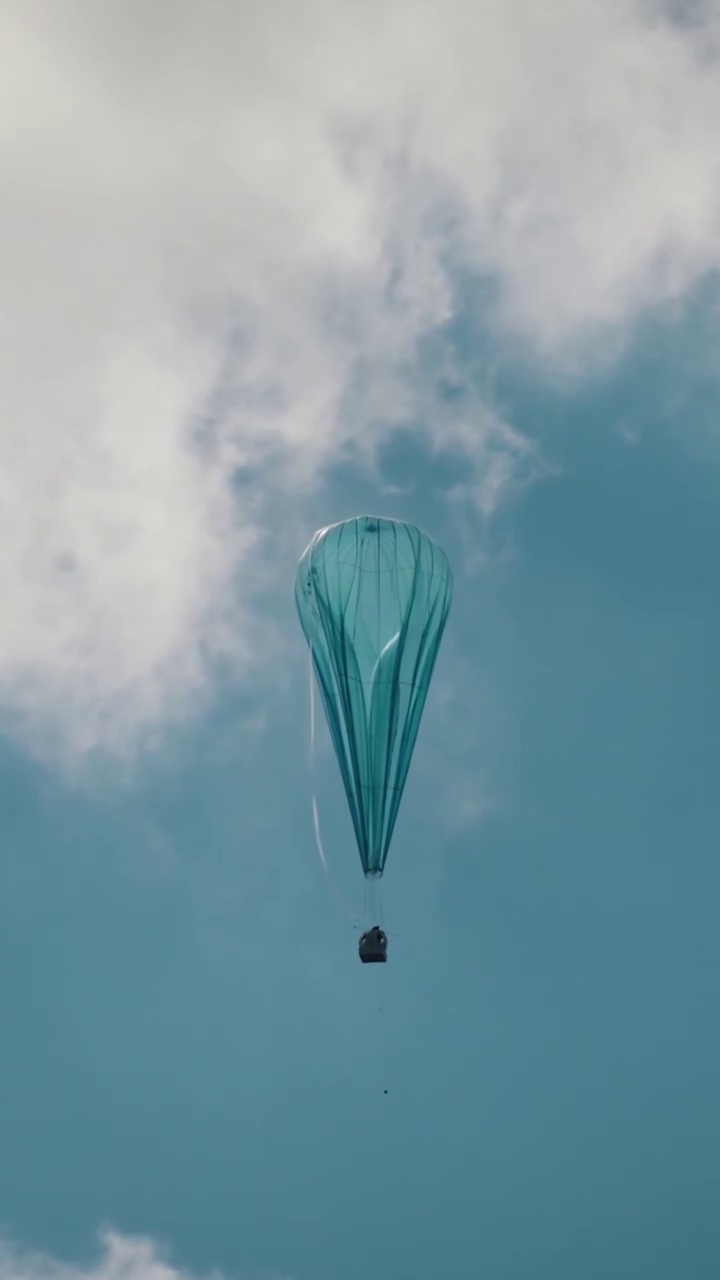
The balloon was launched on October 11, 2024, at 12:35 PM local time from the Albi airfield, following a thorough pre-flight readiness review that encompassed envelope inflation, ballast calibration, meteorological assessment, and avionics system checks. The ascent proceeded nominally, and the system reached a maximum altitude slightly above 6,000 meters. Vertical velocity remained within the predicted profile, averaging below 5 m/s, which ensured stable load distribution across the suspension system and minimized stress on the capsule interface.
The pressurized capsule prototype maintained differential pressure stability throughout the mission. The onboard oxygen supply and carbon dioxide scrubbing systems operated without deviation, while cabin environmental parametersincluding temperature, humidity, and pressureremained within tolerance ranges for the entire five-hour flight. Redundant communication channels ensured uninterrupted telemetry transmission to ground control, enabling continuous monitoring of life-support performance, structural loads, and atmospheric measurements. Attitude was passively stabilized by the balloon envelope geometry, and lateral drift remained within projected margins, eliminating the need for corrective intervention.
Descent was initiated through controlled venting of lifting gas, with envelope contraction progressing as expected. The vertical deceleration profile stayed within calculated limits, and final approach was stabilized through coordinated ballast release. The capsule touched down within the designated recovery zone near Liausson with negligible structural impact loads, confirming the reusability of the system. Post-flight inspection revealed no damage to the capsule hull, life-support systems, or suspension assemblies. The balloon envelope, however, was destroyed after becoming entangled in vegetation during landing, which required the assistance of woodcutters and a helicopter to recover the remaining equipment.
External references
- Zephalto website
- Detailed flight path of the balloon obtained via Airplanes Live!
Images of the mission


StratoCat is an independent, non-commercial project maintained to preserve and share the history of scientific and stratospheric ballooning. If you find the site useful, you can help keep it running with a small donation toward its operating costs. Every contribution, even the equivalent of a cup of coffee, is greatly appreciated.