
Purpose of the flight and payload description

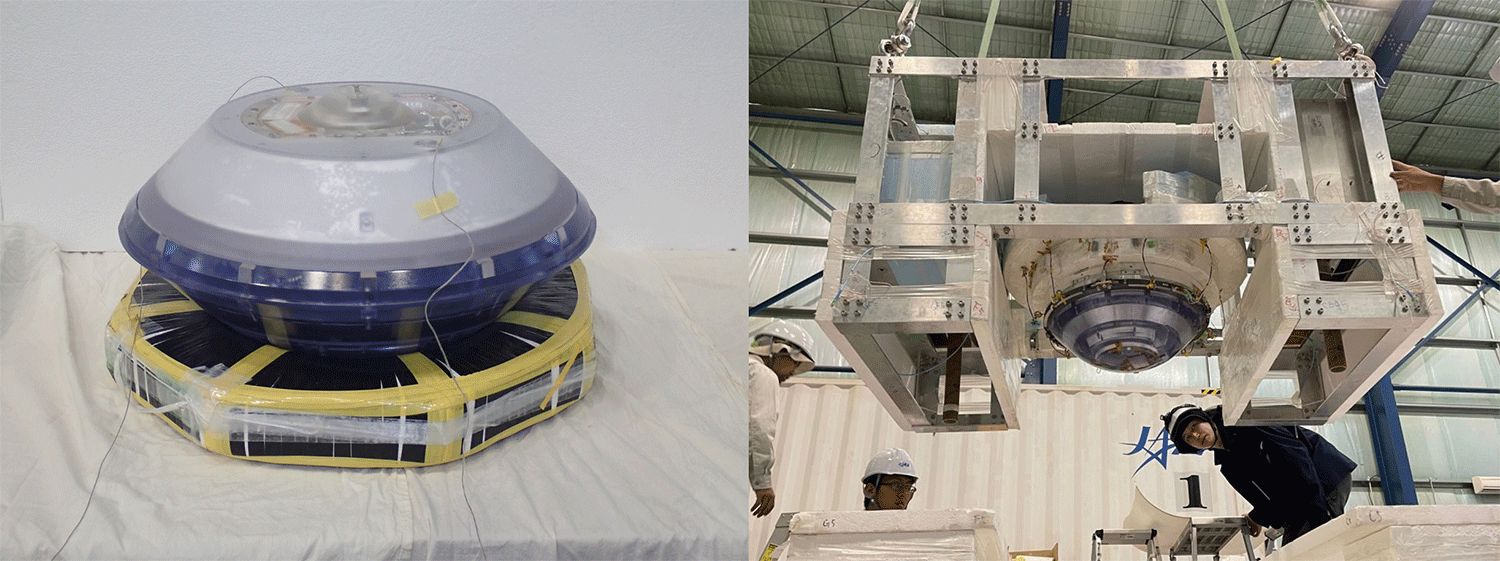
The objective of the flight was to conduct a drop test of the Sample Return Capsule (SRC) an experimental Hayabusa-type aeroshell with a diameter of approximately 60 cm and a total mass of 45.4 kg. Its external and aerodynamic shape mirrors that of the original Hayabusa SRC, and is geometrically identical to the MMX-SRC intended for the Mars Moon Exploration mission.
In the scheme at left we can see a basic drawing of its main parts. The capsule is structured around a central instrument module sandwiched between a front and a back heat shield, both of which are dummy components made of general plastic in this experimental version, though matched in mass to the actual MMX-SRC hardware. The front heat shield houses a pyrotechnic mechanism responsible for jettisoning both shields and triggering parachute ejection, as well as a pressure sensor board with five ports, one at the stagnation point and four surrounding it, used to characterize the aerodynamic flow conditions during descent. The back heat shield carries small hooks on its inner surface that connect to the parachute storage bag, so that when it is ejected, it physically draws the parachute out behind it.
Inside the instrument module, the space that would normally hold a sample container was instead occupied by onboard avionics: batteries, a telemetry system, recovery support electronics, and an inertial measurement unit. GPS and Iridium antennas were mounted above and below the module to allow post-landing position transmission for recovery operations. An action camera was mounted on the backside to capture the parachute deployment sequence.
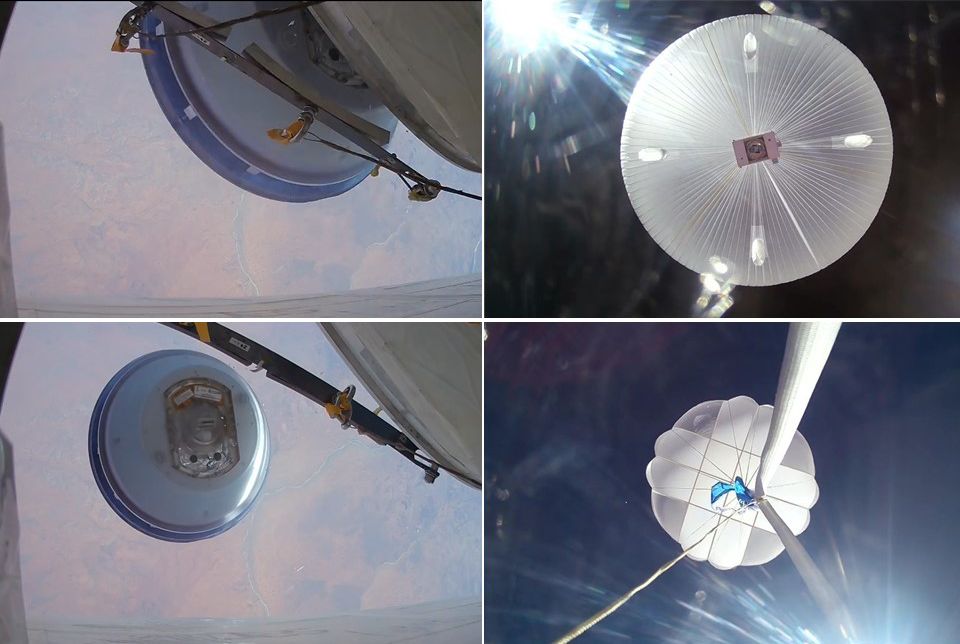
The parachute itself was a cross-type canopy with a designed drag area of 6.4 m², packed into a slender cylindrical bag stored around the instrument module. It was deployed automatically by a timer set to trigger 115 seconds after capsule separation. When the pyrotechnics fire, the front and back heat shields were jettisoned simultaneously, and the departing back shield dragged the parachute bag out with it, pulling the canopy into the airstream. The storage bag's temporary threads were cut by tension from the suspension lines and risers, allowing the canopy to inflate and reach full deployment in roughly one second from pyrotechnic activation.
The SRC was meant to be released from a stratospheric balloon at an altitude of between 39 and 40 kilometers. All the operations will be conducted under management and supervision of the Civil Aviation Safety Authority of Australia.
Details of the balloon flight
Balloon launched on: 5/11/2023 at 22:09 UTC
Launch site: Australian Balloon Launching Station, Alice Springs, Australia
Balloon launched by: Japan Aerospace Exploration Agency (JAXA)
Balloon manufacturer/size/composition: Zero Pressure Balloon model B300 300.000 m3
Flight identification number: B23-02
End of flight (L for landing time, W for last contact, otherwise termination time): 5/12/2023 at 5:05 utc
Balloon flight duration (F: time at float only, otherwise total flight time in d:days / h:hours or m:minutes - ): 7 h
Landing site: In Queensland, Australia
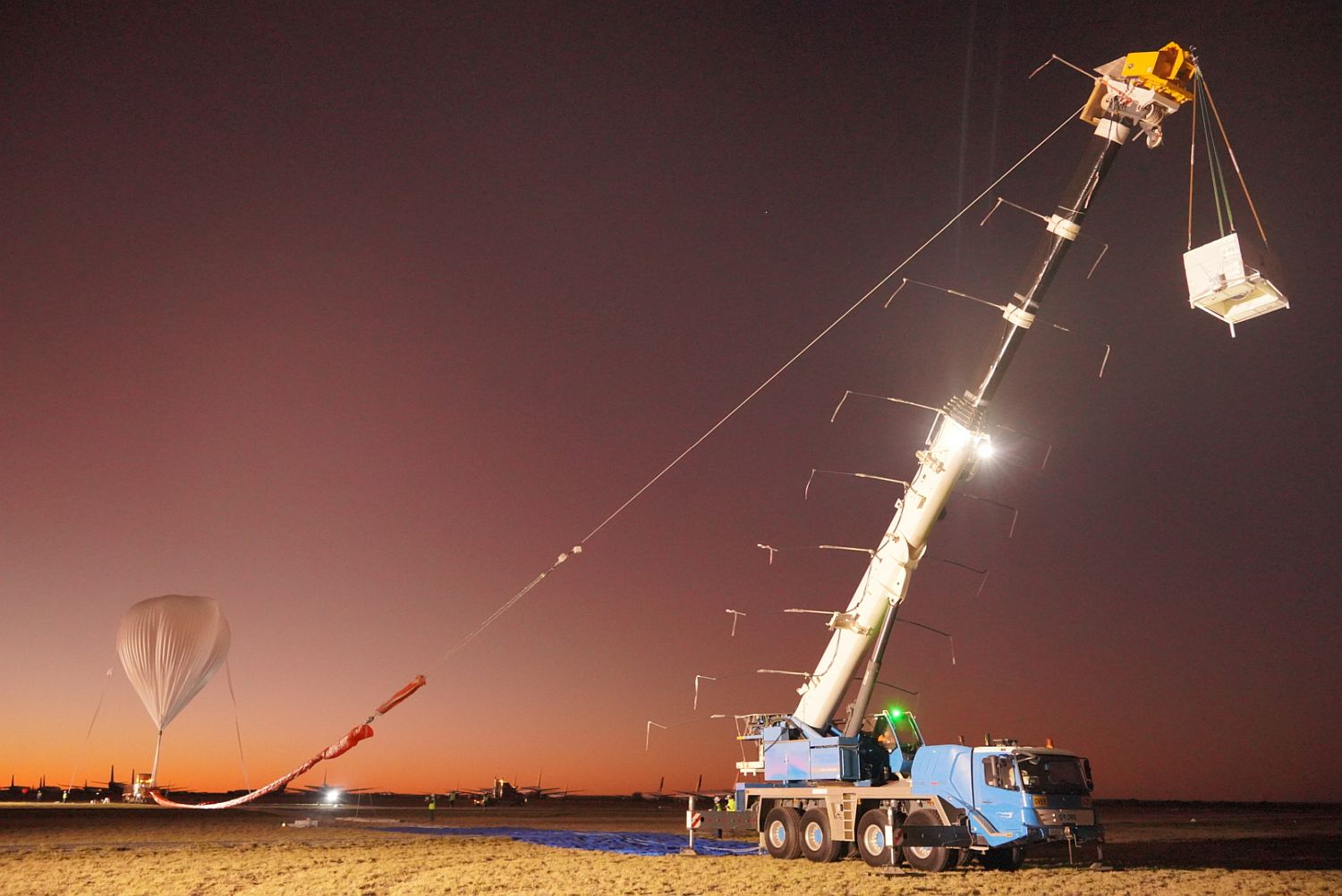
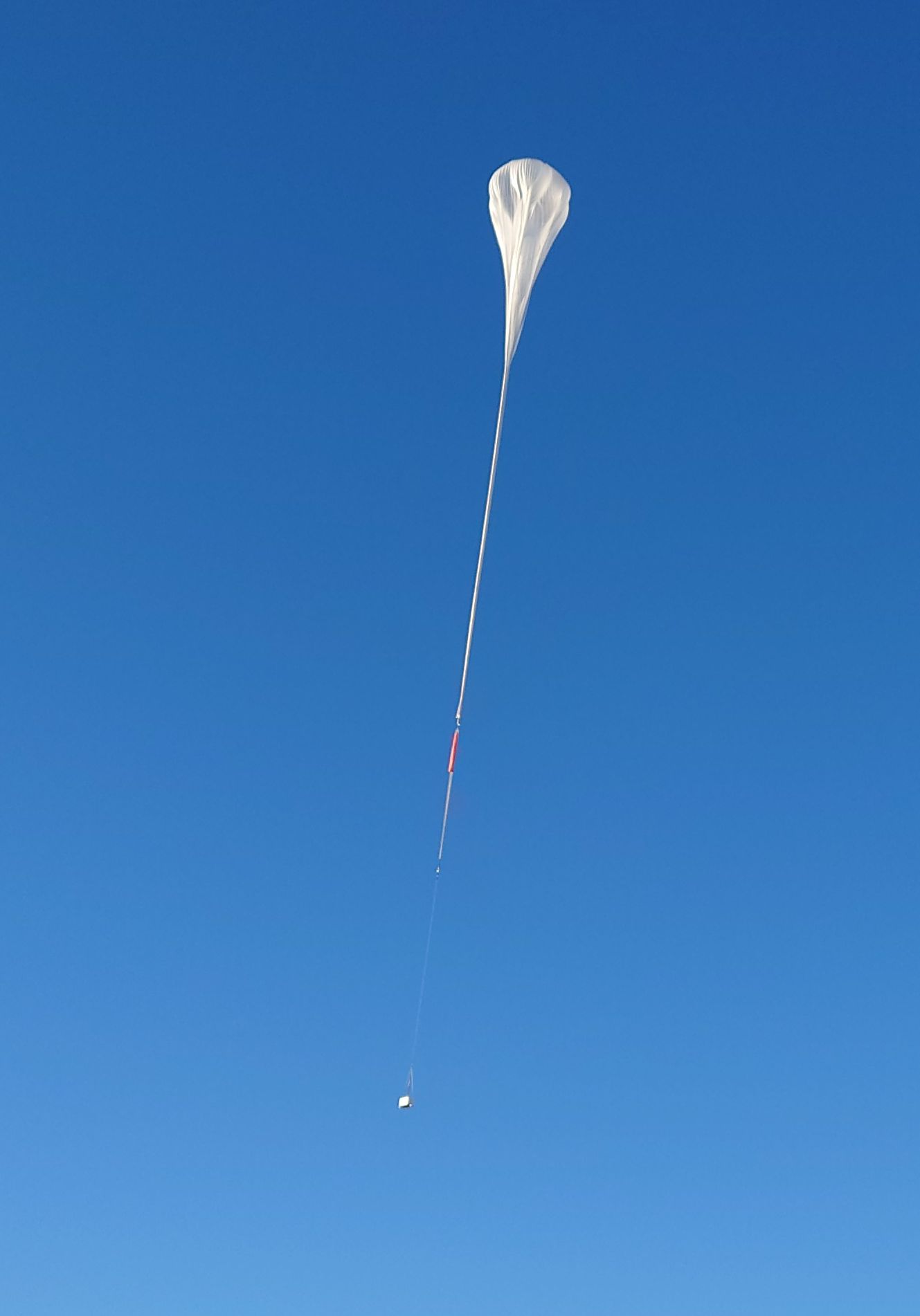
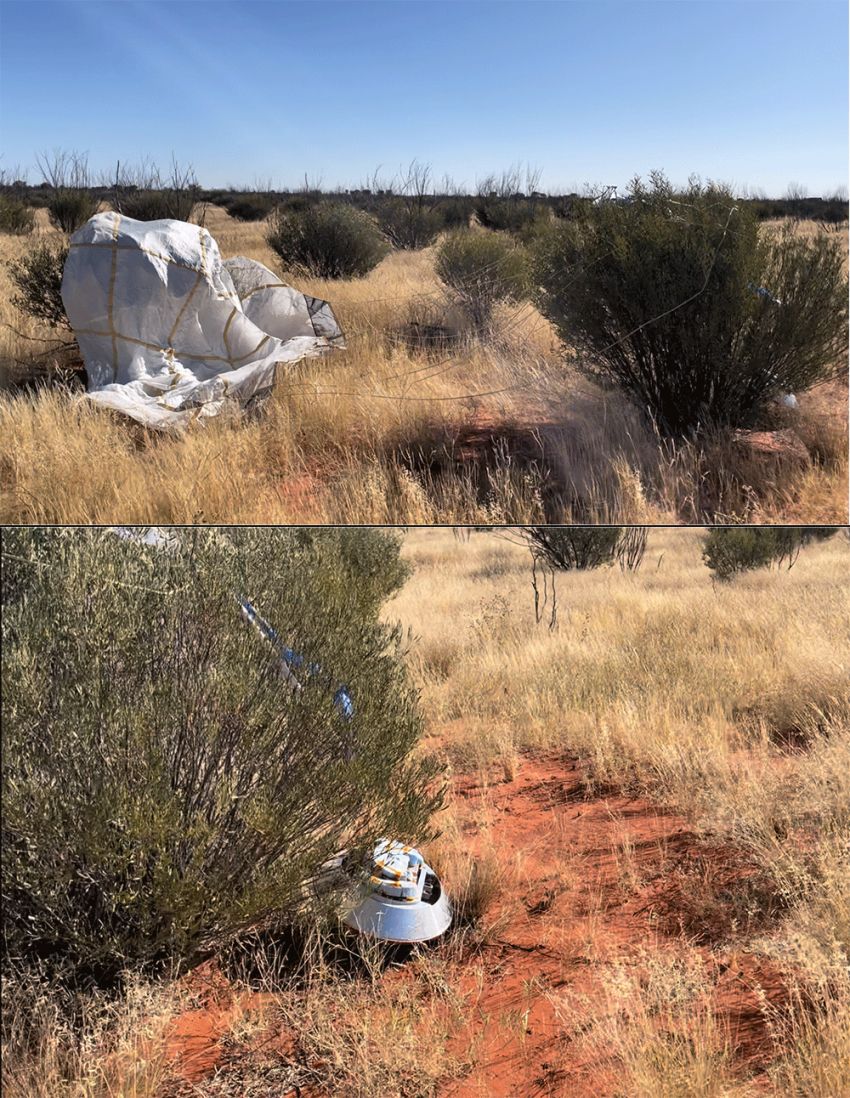
The balloon was launched from Alice Springs Airport at 22:09 UTC on May 11, 2023, reaching 39 kilometers altitude in about two hours. After two more hours of leveled flight over the Simpson Desert, the experimental SRC was separated from the gondola at 1:55 UTC on May 12, roughly 200 km east of the launch site. The SRC accelerated past Mach 1.0 in free descent, the parachute deployed 115 seconds after separation, and the instrument module landed softly about 1,400 seconds later, approximately 270 km east of Alice Springs.
The balloon continued eastward and was terminated at 5:05 UTC, with the gondola descending around 500 km east of Alice Springs in Queensland. The instrument module was located by aircraft via GPS and Iridium positioning and recovered by helicopter the following day. Both heat shields were also recovered, and all flight data was successfully retrieved.
External references
- Diary of ballooning experiments in Australia: Flight test of a sample return capsule ISAS / JAXA website
- Evaluation of aerodynamic stability in the transonic and low speed range of Hayabusa-type SRC Balloon Symposium 2022, Conference, ISAS/JAXA, Sagamihara, Kanagawa, Japan
- News about the flight (in Japanese) JAXA website
- Post Flight Report of Free Flight Test of Hayabusa-Type Larger Sample Return Capsule using Scientific Balloon in Australia Proceedings of the 35th ISTS, 2025
Images of the mission
If you consider this website interesting or useful, you can help me to keep it up and running with a small donation to cover the operational costs. Just the equivalent of the price of a cup of coffee helps a lot.