
Purpose of the flight and payload description
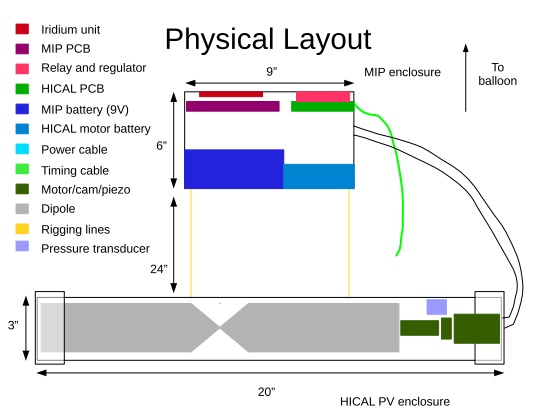
The ANITA HiCal (High-altitude Calibration) balloon-borne transmitter is a calibration pulsing unit that emulates the radio signals produced by ultra-high energy cosmic rays (HECR). The instrument, developed by a team from the University of Kansas, is a complementary project of the ANtarctic Impulsive Transient Antenna (ANITA) project, which surveys by means of a special balloon-borne receiver the Antarctic ice looking for radio signals produced by ultra-high energy (UHE) neutrinos and cosmic rays. The HiCal payload is launched on a second balloon in conjunction with ANITA, with the objective of transmitting pulses that would be received by ANITA both directly and as signals re?ected from the ice surface. A ratio of the amplitudes of re?ected to direct signals would provide a direct measurement of any decoherence effects caused by surface roughness.
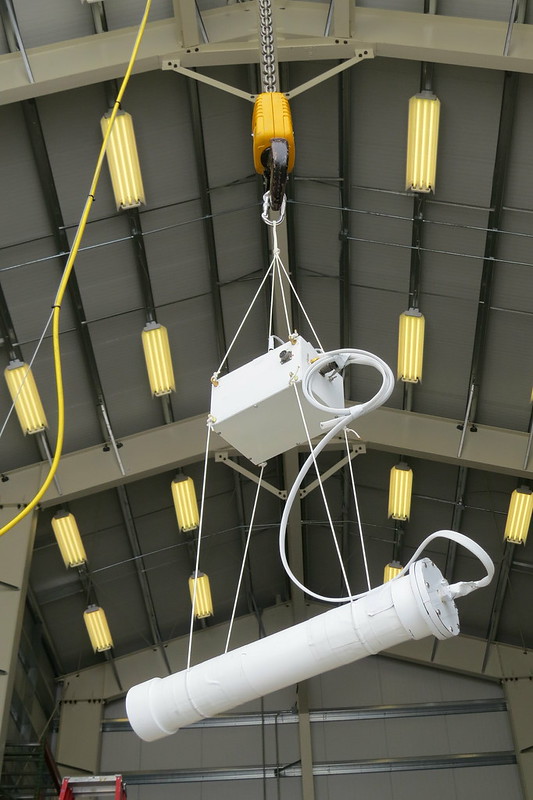
The HiCal-1 transmitter is based on a small ceramic piezo-electric which translate the mechanical energy of impact of a solid "actuator" with a piezo ceramic into a ~10 nanosecond-duration burst of electrical energy, and are capable of generating kiloVolt-scale radio-frequency signals. It also incorporates a "Micro-Instrumentation Package" or MIP which is a standard unit for NASA balloon missions, containing hardware for communications, telemetry, and GPS time and location information of the payload. Below the MIP, the "actuator" comprises a motor turning at a rep rate of approximately 0.33 Hz which drives a camshaft, designed to depress the spring-loaded piezo electric at the same 0.33 Hz frequency. Signals from the piezo are directed into a dipole antenna. A dedicated pressure vessel, constructed from lightweight ABS (Acrylonitrile-Butadiene-Styrene), was built to enclose the dipole and piezo in a sealed, 1000 mB environment. A second GPS board time stamps the RF signals being emitted by the dipole.
Details of the balloon flight
Balloon launched on: 1/6/2015
Launch site: Williams Field, McMurdo Station, Antarctica
Balloon launched by: Columbia Scientific Balloon Facility (CSBF)
Balloon manufacturer/size/composition: Zero Pressure Balloon
Flight identification number: 661N
End of flight (L for landing time, W for last contact, otherwise termination time): 1/11/2016
Balloon flight duration (F: time at float only, otherwise total flight time in d:days / h:hours or m:minutes - ): 5 d 13 h
Landing site: Payload no recoverable
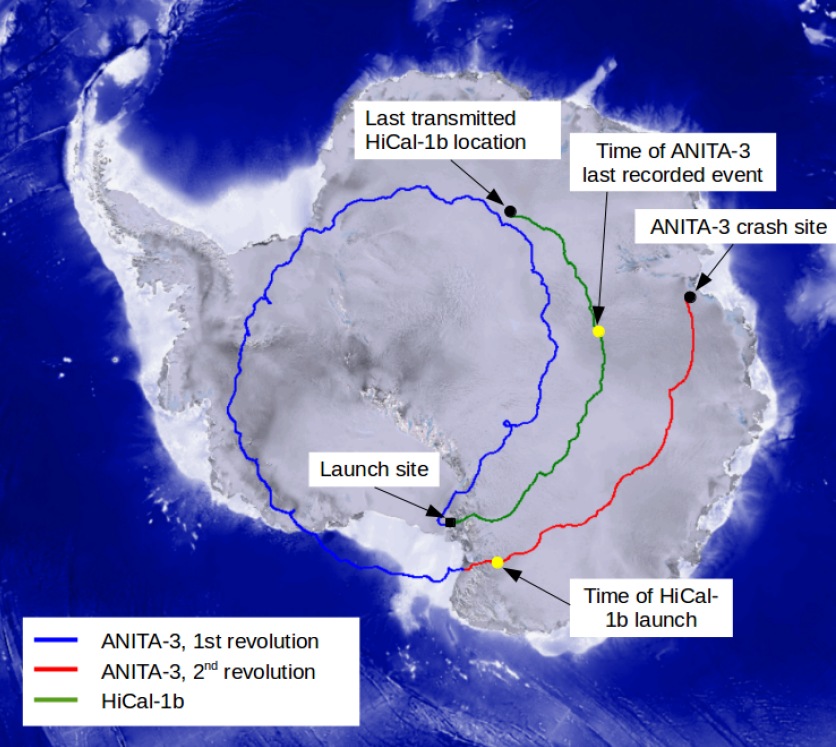
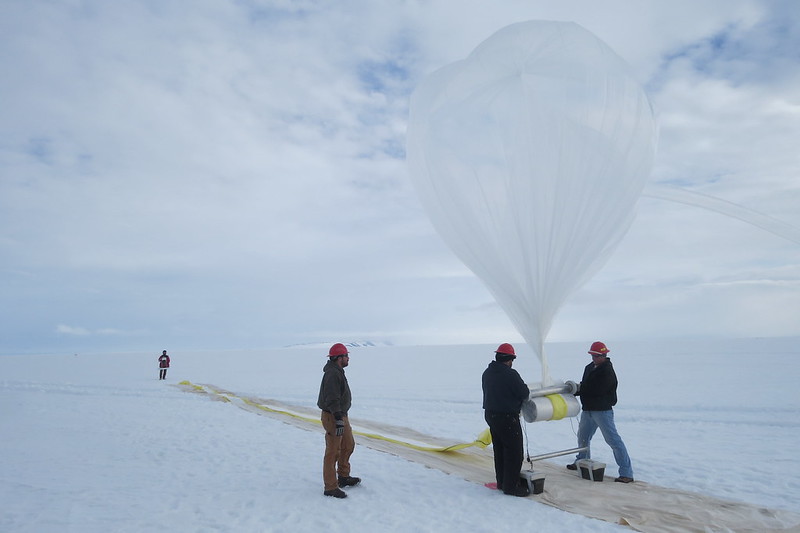
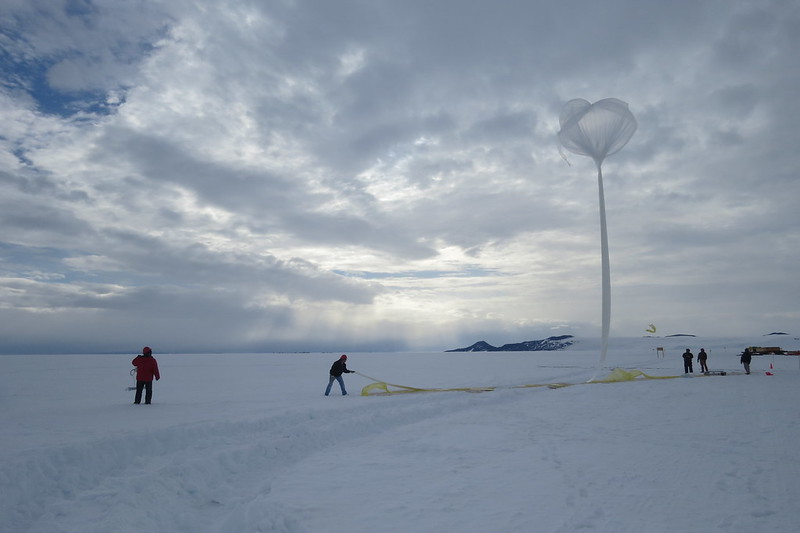
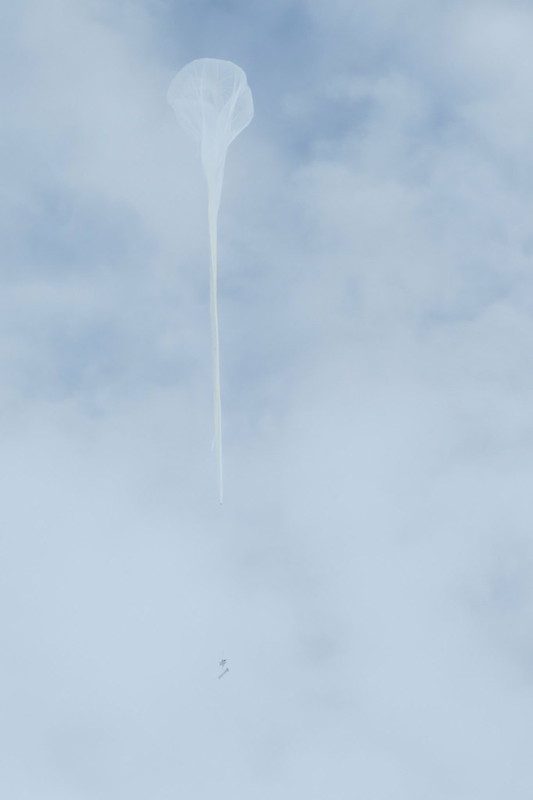
This was the second flight attempt -dubbed "HiCal-1B" and was carried out on January 5th, 2015, after ANITA III completed one circuit around the pole and was in the proximity of McMurdo station. A first attempt to launch a similar payload on December 19, 2014 (just one day after ANITA III launch) failed as the balloon had insufficient lift and then when launched Hi-Cal instrument worked erratically. This time, almost immediately after turning on the HiCal transmitter during ascent, ANITA began registering signals, the ~700 km separation distance notwithstanding. After HiCal reached its 38-km float altitude, signals continued to be recorded for the subsequent 48 hours (after which time the ANITA flight was terminated), at ANITA-HiCal separations between 650 and 800 km. In the map we can see in green the flight track of the balloon.
External references
- Antarctic Surface Re?ectivity Measurements from the ANITA-3 and HiCal-1 Experiments submitted to Journal of Astronomical Instrumentation
- Design, Implementation and First Results of the ANITA-HiCal Experiment PhD. Thesis by Jessica Stockham, University of Kansas, 2018
Images of the mission
StratoCat is an independent, non-commercial project maintained to preserve and share the history of scientific and stratospheric ballooning. If you find the site useful, you can help keep it running with a small donation toward its operating costs. Every contribution, even the equivalent of a cup of coffee, is greatly appreciated.