
Purpose of the flight and payload description
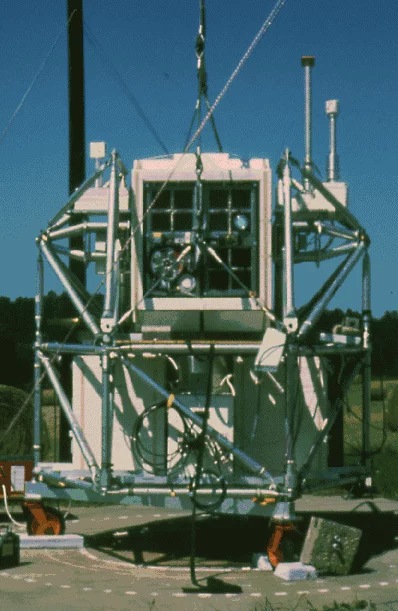
HEXE was the acronym for High Energy X-Ray Experiment a balloon-borne instrument developed by the Max-Planck-Institut für extraterrestrische Physik in collaboration with the Astronomisches Institut, Tubingen from Germany. The goal of the instrument was to observe X-Ray sources and was based in a previous design flown several times onboard balloons by these two research centers.
In the image at left we can see a picture of the HEXE gondola before flight. The payload consisted of two main parts, a two axis stabilised gondola and a detector block. The microprocessor controlled gondola provided power, pointing and telemetry. The detector block was divided into four detector bays, three of which contained the independent 800 cm2 phoswich scintillator detectors whilst the other bay hold the 114 cm2 solid state detector assembly. By rotating the detector block around an horizontal and a vertical axis, all parts of the sky above the horizon could be observed by the detectors.
The solid-state detector itself occupied one bay of the detector block, weighing 65 kg and fitting within an envelope of roughly 35 × 35 × 80 cm³. Its core comprised an array of six intrinsic germanium planar crystals, each with a nominal active diameter of 49.2 mm and thickness of 7 mm, yielding a total geometric area of 114 cm². These crystals functioned as reverse-biased diodes and were housed within an aluminium vacuum cryostat (44 mm height, 210 mm diameter). Each crystal had its own 0.5 mm thick beryllium entrance window and was mounted via boron nitride insulators onto an aluminium cold plate. Individual preamplifier first stages were located beside each crystal inside the cryostat to prevent crosstalk.
Maintaining the germanium crystals below 120 K required liquid nitrogen cooling. A 51-liter dewar (730 mm height, 134 mm diameter), welded to the cryostat and sharing its vacuum, supplied liquid nitrogen via a copper link to the cold plate. This provided approximately two days of cooling. During flight, the dewar was pressurized to 650 mbar to prevent nitrogen freezing at the low ambient pressure. The cold plate temperature varied between 97 K and 115 K as the nitrogen level dropped.
A shielding system surrounded the detector to minimize background. Directly around the cryostat was an active shield made of two CsI(Na) crystals: a lower crystal (50 mm thick, 250 mm diameter with 45 mm high walls) viewed by a 5" photomultiplier tube (PMT), and an upper slab (20 mm thick, 235 mm diameter with holes above each Ge crystal) viewed by a 2" PMT. These provided anticoincidence rejection for particle and gamma-ray events. Above the upper CsI shield were commandable Am241 calibration sources. Encasing the CsI shield and Collimator was a passive "graded shield" of 3 mm lead, 2 mm tin, and 0.5 mm copper to attenuate low-energy photons and reduce fluorescence. Finally, a plastic scintillator particle shield surrounded four sides of the detector assembly, reducing the background rate by 26%.
A hexagonal molybdenum collimator (0.5 mm thick walls), one placed above each germanium crystal, defined the field of view to approximately 4° full width at half maximum (FWHM).
Signal processing involved a dedicated cooled FET preamplifier (PGT 352 type) for each crystal, followed by a main pulse shaping amplifier (Tennelec 202 BLR) providing 3.2 µs Gaussian shaping. The six amplified analog signals were multiplexed to a single 1024-channel Wilkinson ADC. The multiplexer also generated a 3-bit crystal identification address. Outputs from the CsI(Na) and plastic shield PMTs were discriminated; logic signals from these were used to veto events in the germanium detectors via anticoincidence gating of the multiplexer.
A spinoff of the project was a space-proof version of a section of the instrument. Known as MIR-HEXE it operated since 1987 on board the Russian space station Mir until its de-orbiting in 2001.
Details of the balloon flight
Balloon launched on: 5/9/1980 at 16:07 utc
Launch site: National Scientific Balloon Facility (NSBF), Palestine, Texas, US
Balloon launched by: National Scientific Balloon Facility (NSBF)
Balloon manufacturer/size/composition: Zero Pressure Balloon Winzen - 981.551 m3 (17.78 microns) - SF 445.72-070-NSCR-02
Balloon serial number: W34.31-3-03
Flight identification number: 1197P
End of flight (L for landing time, W for last contact, otherwise termination time): 5/10/1980 at 17:12 utc
Balloon flight duration (F: time at float only, otherwise total flight time in d:days / h:hours or m:minutes - ): 46 h
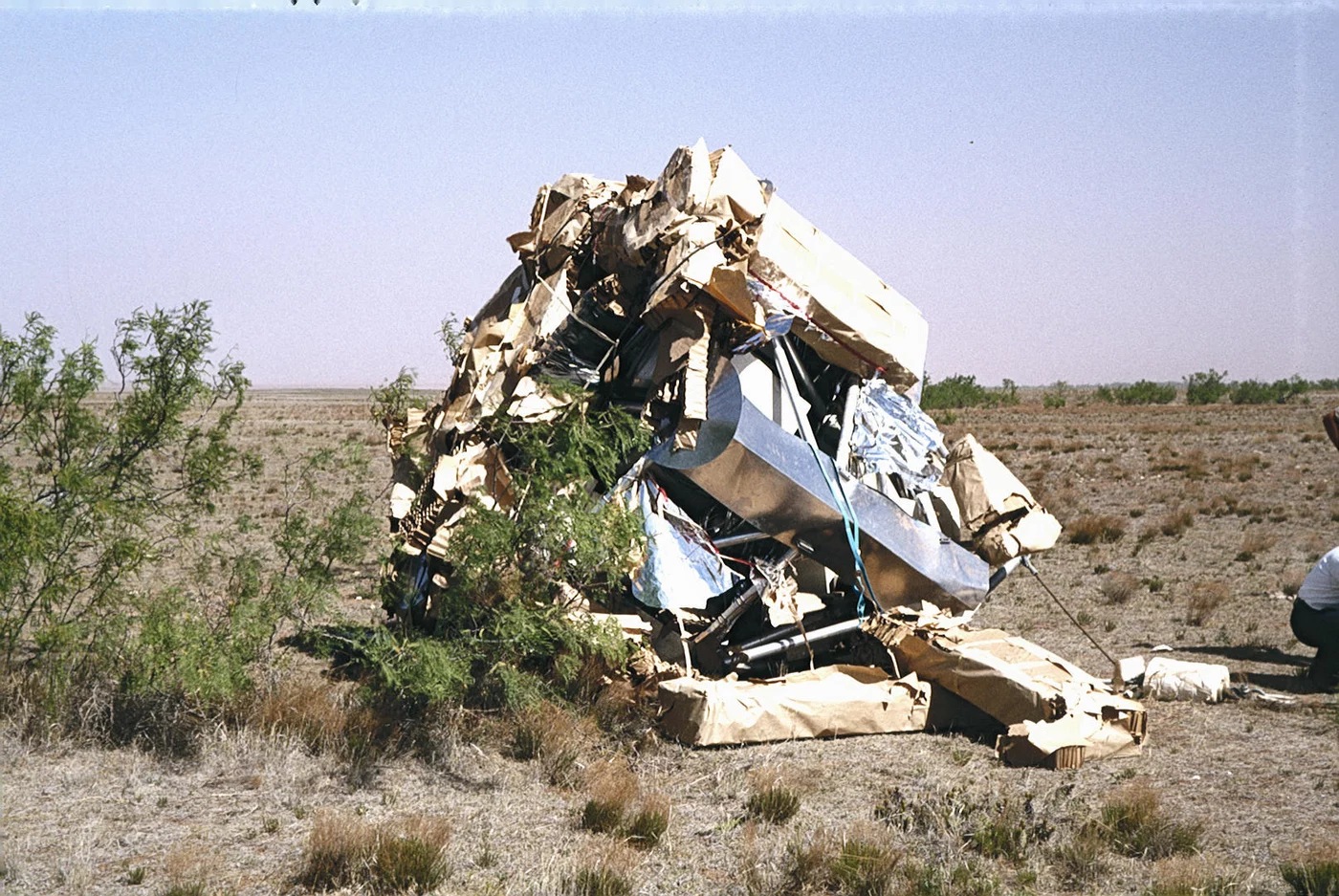
Landing site: 17 miles E of Seminole, Texas, US
Payload weight: 2089 kgs
External references
- A balloon-borne solid state cosmic X-ray detector Nuclear Instruments and Methods in Physics Research, Vol. 197, p. 477 - 483
- High Energy X-Ray Experiment (HEXE) Max Planck Institute website
- National Scientific Balloon Facility Annual Report FY 1980 National Center for Atmospheric Research, April 1981
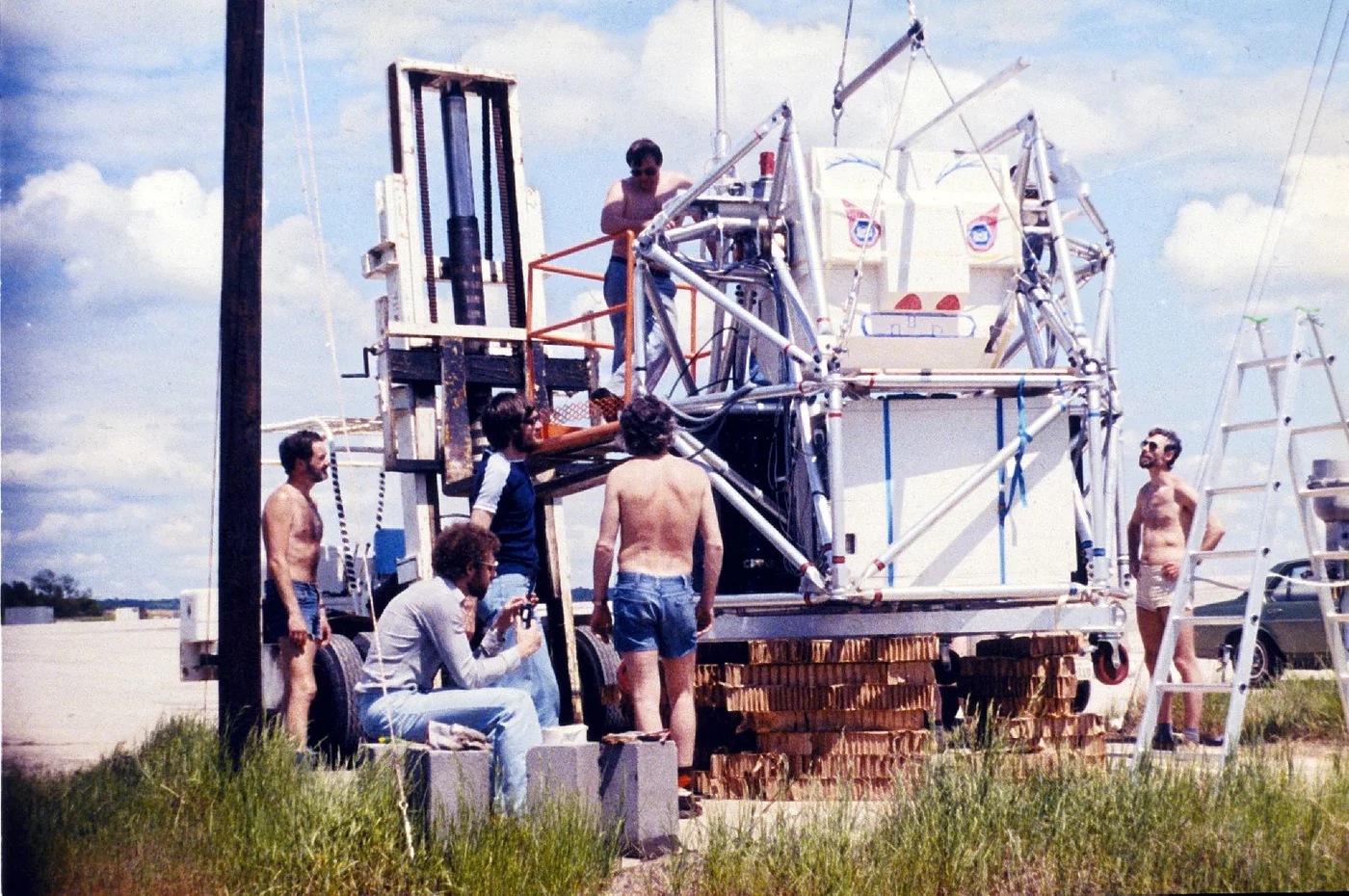
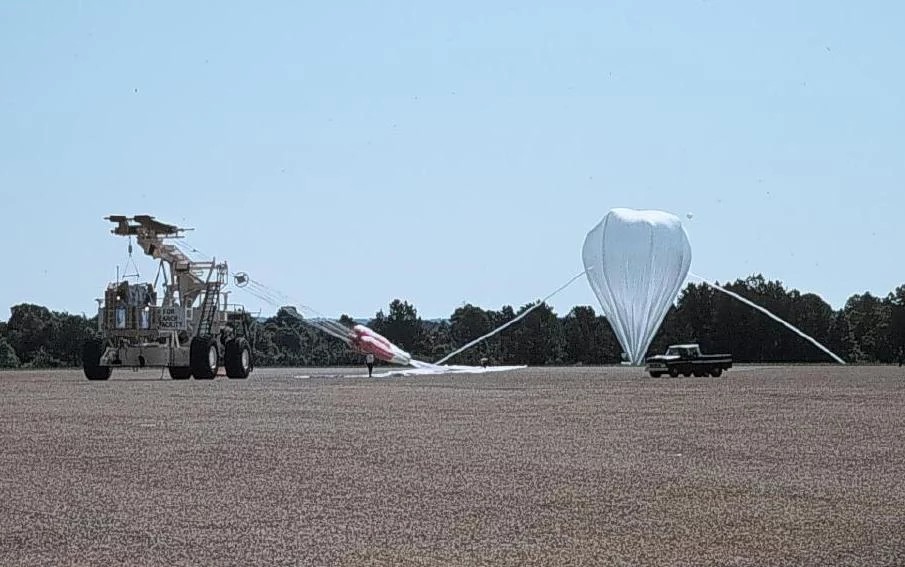
Images of the mission


StratoCat is an independent, non-commercial project maintained to preserve and share the history of scientific and stratospheric ballooning. If you find the site useful, you can help keep it running with a small donation toward its operating costs. Every contribution, even the equivalent of a cup of coffee, is greatly appreciated.