
Purpose of the flight and payload description
COS-B (Celestial Observation Satellite B) was the first European Space Research Organisation (ESRO) mission to study cosmic gamma ray sources. COS-B was first put forward by the European scientific community in the mid-1960s and approved by the ESRO council in 1969. The mission consisted of a satellite containing gamma-ray detectors, which was launched by NASA on behalf of the ESRO on 9 August 1975. The experiment onboard COS-B was developed through the CARavan Collaboration, an international consortium of six European research institutions. The participating organizations included the Centre d'études nucléaires in Saclay, France; the Max Planck Institute in Garching, Germany; the Space Science Division at ESRO's ESTEC facility; the Kamerlingh Onnes Laboratorium in Leiden, Holland; and universities in Milan and Palermo, Italy.
The detection apparatus consisted of several interconnected components working in concert to identify and measure gamma rays while filtering out unwanted charged particle interference. At the heart of the system was an anti-coincidence counter specifically designed to detect and reject charged particles that could contaminate the gamma-ray measurements. The core detection mechanism employed a spark chamber that facilitated the conversion of incoming gamma rays into electron-positron pairs. This conversion process was monitored by a telescope system that served as a trigger mechanism, activating the spark chamber to visualize the trajectories of the created electron pairs. The final component was an energy calorimeter that absorbed the electron-positron pairs and measured their total energy, providing crucial data about the original gamma ray's characteristics. The direction of the incoming gamma ray could be determined by analyzing the electron track patterns recorded in the spark chamber.
THE BALLOON FLIGHT
Prior to the satellite mission, the experiment underwent extensive testing including a balloon flight to simulate orbital conditions as closely as possible. This balloon flight served multiple critical purposes: evaluating the instrument's performance in distinguishing between genuine gamma-ray events and charged particle contamination, since both could produce similar signatures in the spark chamber and telescope counters; generating orbital-type data necessary for testing and refining the computer programs responsible for data reduction and analysis; and measuring Earth's gamma-ray albedo, which would be essential for calibrating the satellite instruments once in orbit.
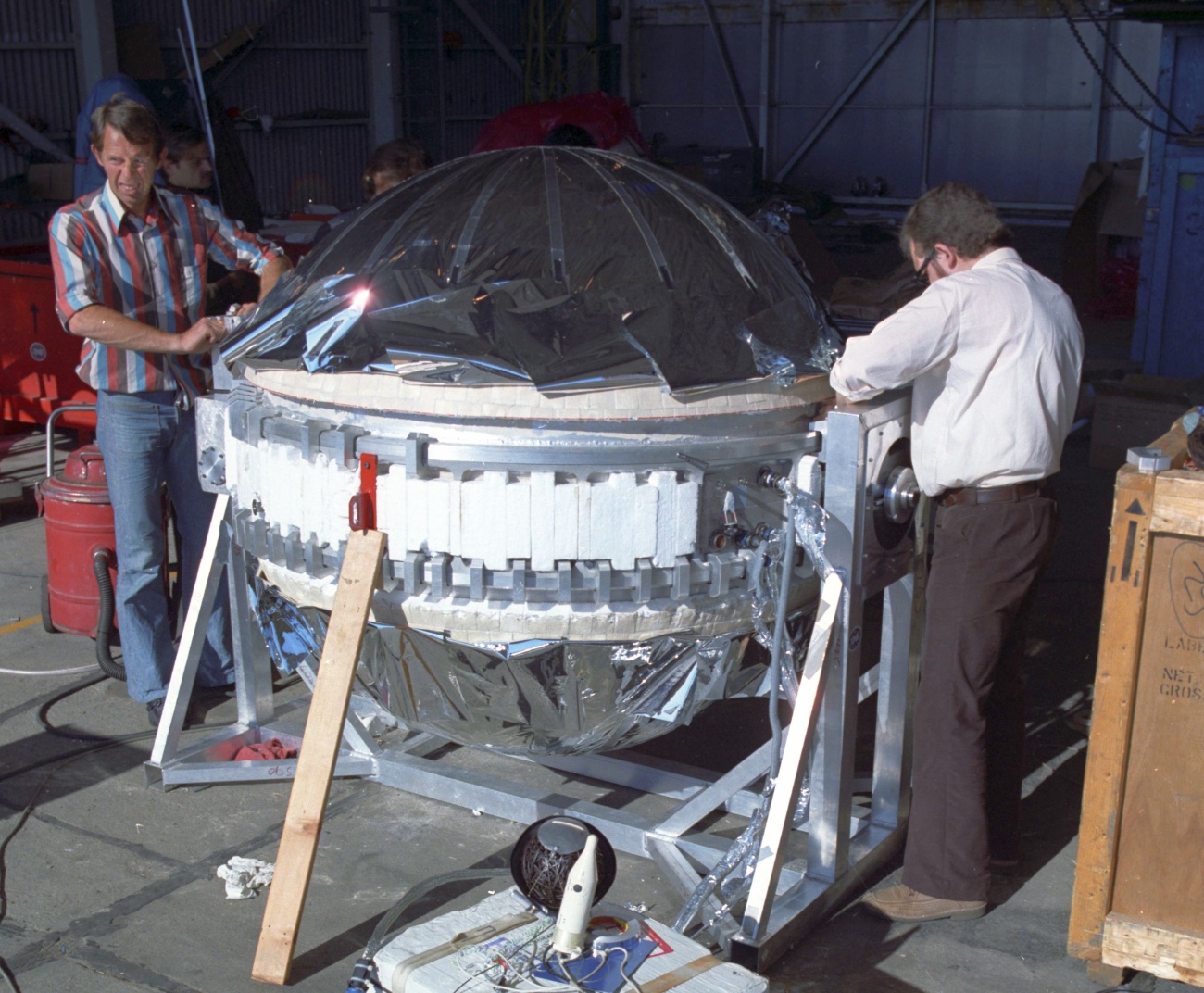
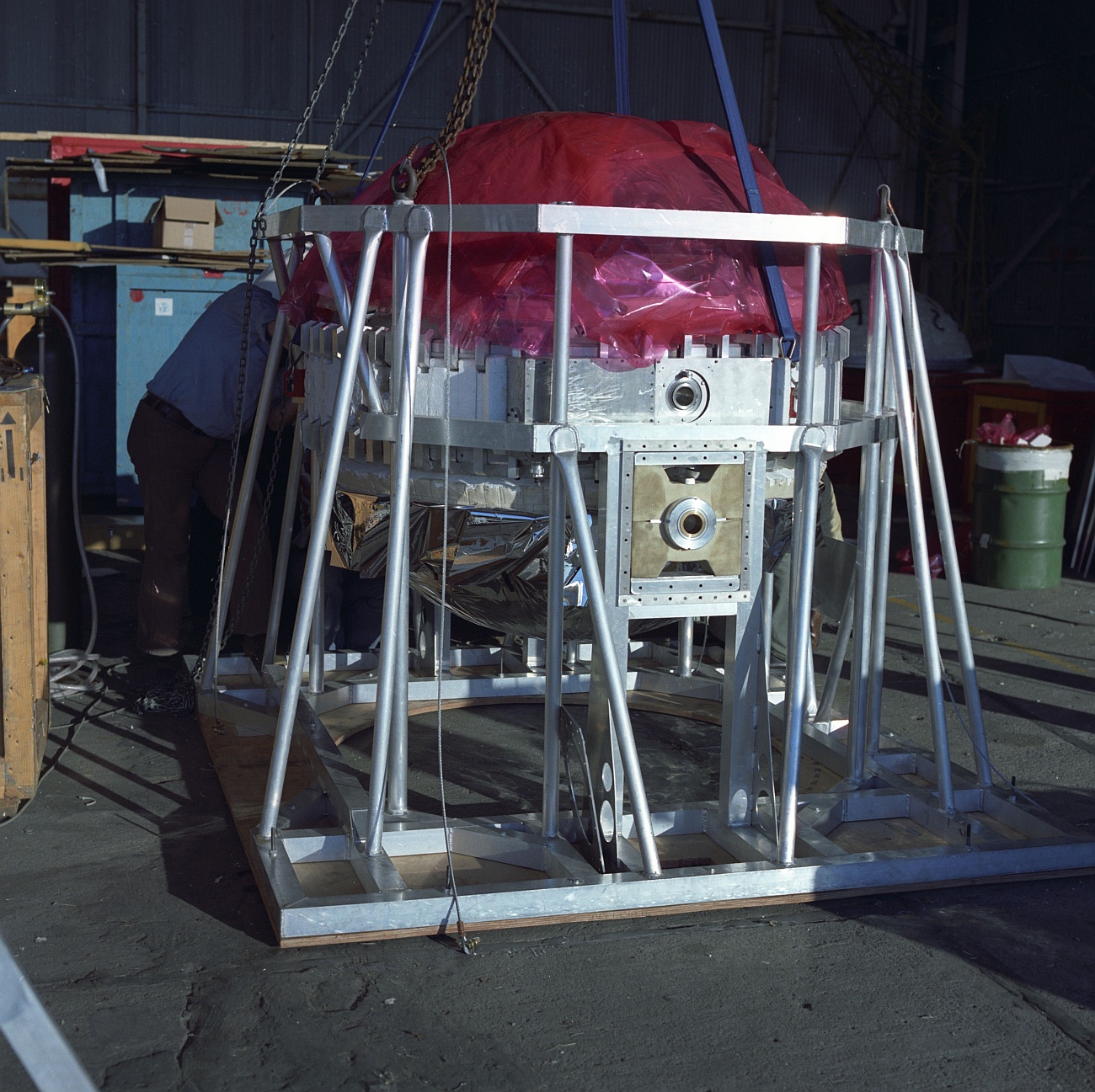
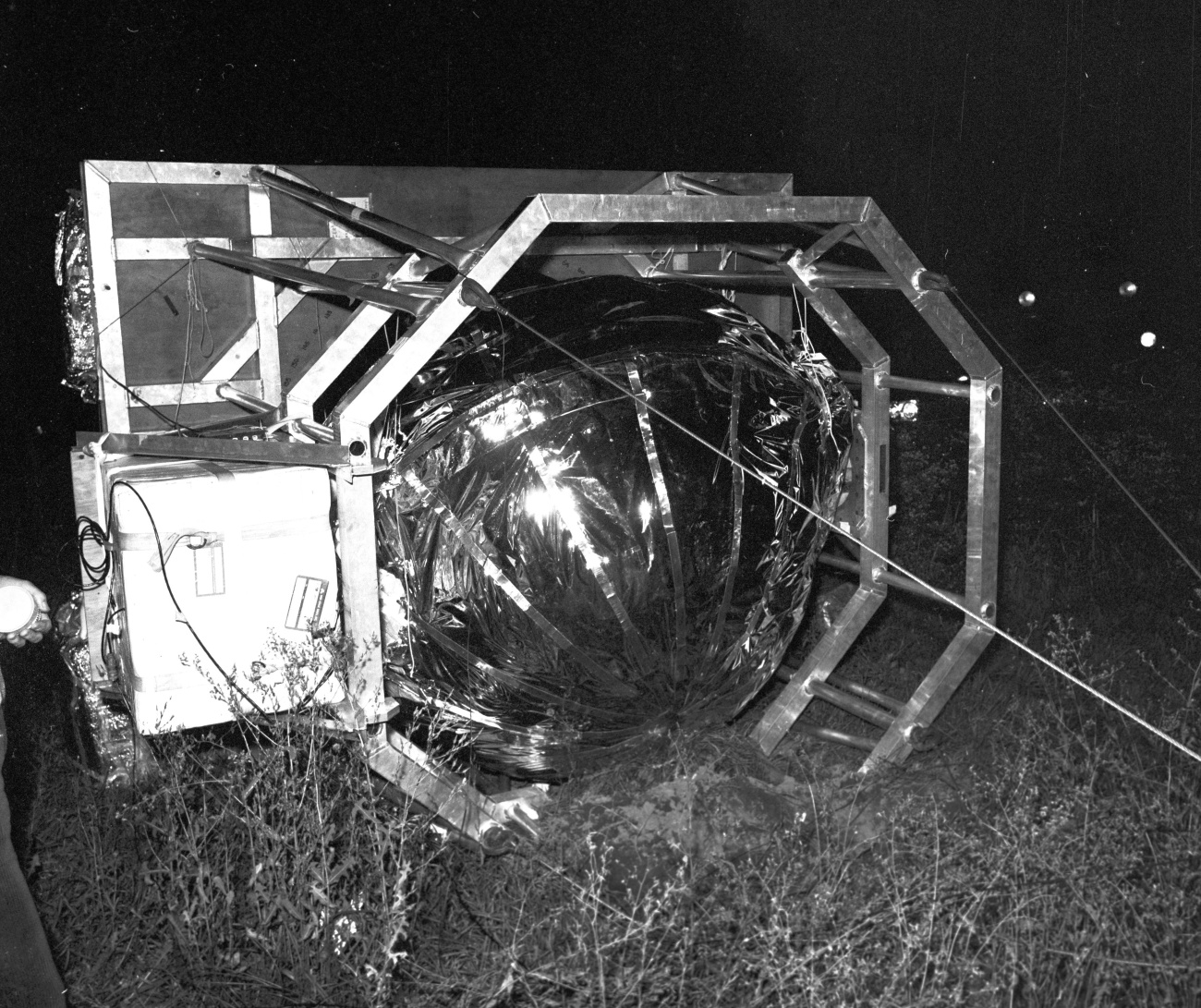
Beginning in 1973, ESTEC and industrial partners undertook the complex task of fabricating, integrating, and testing the balloon gondola system. The gondola's primary structural element was a pressure-tight aluminum sphere measuring 1.5 meters in diameter, constructed from two hemispheres joined at a central ring. This design was crucial for maintaining the internal environment at one atmosphere of pressure throughout the entire flight duration, protecting the sensitive instruments from the harsh conditions of the upper atmosphere.
The gondola's engineering requirements were substantial, necessitating the design and manufacture of specialized electrical subsystems at ESTEC. These systems included power supply units, telemetry equipment for data transmission, and telecommand systems for remote operation control. These components were specifically designed to replace the satellite versions of similar systems, adapting them for the unique requirements of balloon-borne operation.
Rigorous testing protocols were implemented to ensure the gondola's reliability under extreme conditions. The pressure vessel underwent extensive vacuum testing to verify its ability to maintain internal pressure, with tests conducted at pressures as low as 1-3 millibars to simulate high-altitude conditions. Temperature testing was equally thorough, with the system subjected to temperatures as low as minus 50 degrees Celsius to replicate the thermal environment encountered during balloon flights at extreme altitudes.
The mechanical design included a robust support framework engineered to withstand the stresses encountered during various flight phases, with particular attention paid to the critical moments of lift-off, flight operations, and landing recovery. The framework needed to protect the delicate scientific instruments while allowing for the considerable forces and vibrations associated with balloon operations.
Thermal management represented another significant engineering challenge, requiring the development of specialized protection systems to shield the scientific payload from the extreme temperature variations experienced during different phases of the balloon flight. The thermal control system was designed with the specific objective of maintaining the experiment package within a narrow temperature range of zero to plus 20 degrees Celsius throughout the entire mission duration. This temperature control was essential for ensuring the proper operation of the sensitive detection equipment and maintaining calibration accuracy.
Detailed footage from the balloon-borne experiment to validate COS-B
Details of the balloon flight
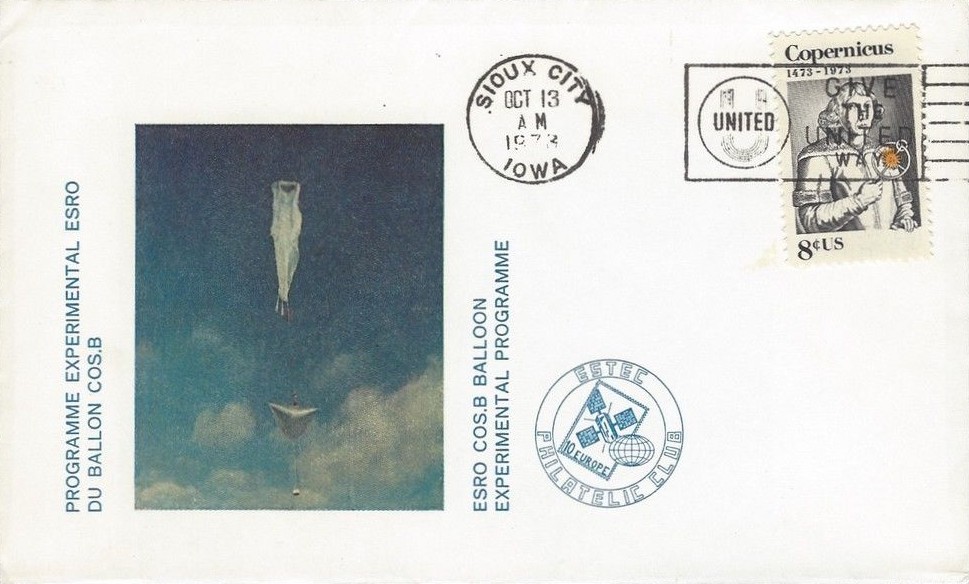
Balloon launched on: 10/13/1973
Launch site: Sioux City Airport, Iowa, US
Balloon launched by: National Scientific Balloon Facility (NSBF)
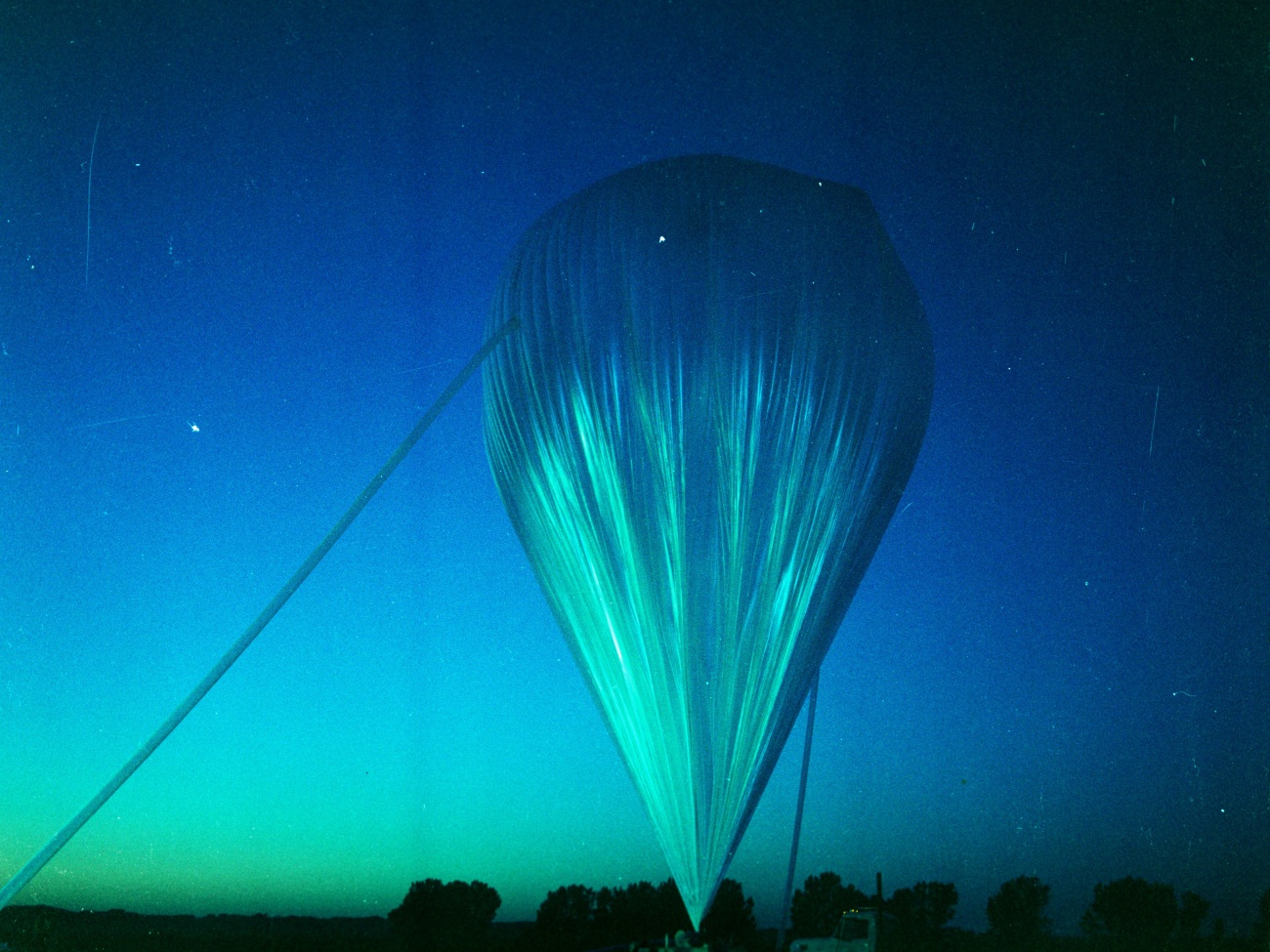
Balloon manufacturer/size/composition: Zero Pressure Balloon Winzen 441.800 m3 (15.24 microns Stratofilm)
Flight identification number: 89N
End of flight (L for landing time, W for last contact, otherwise termination time): 10/13/1973
Balloon flight duration (F: time at float only, otherwise total flight time in d:days / h:hours or m:minutes - ): F 8 h 10 m
Landing site: SE of Flint, Michigan, US
Payload weight: 1011 kgs
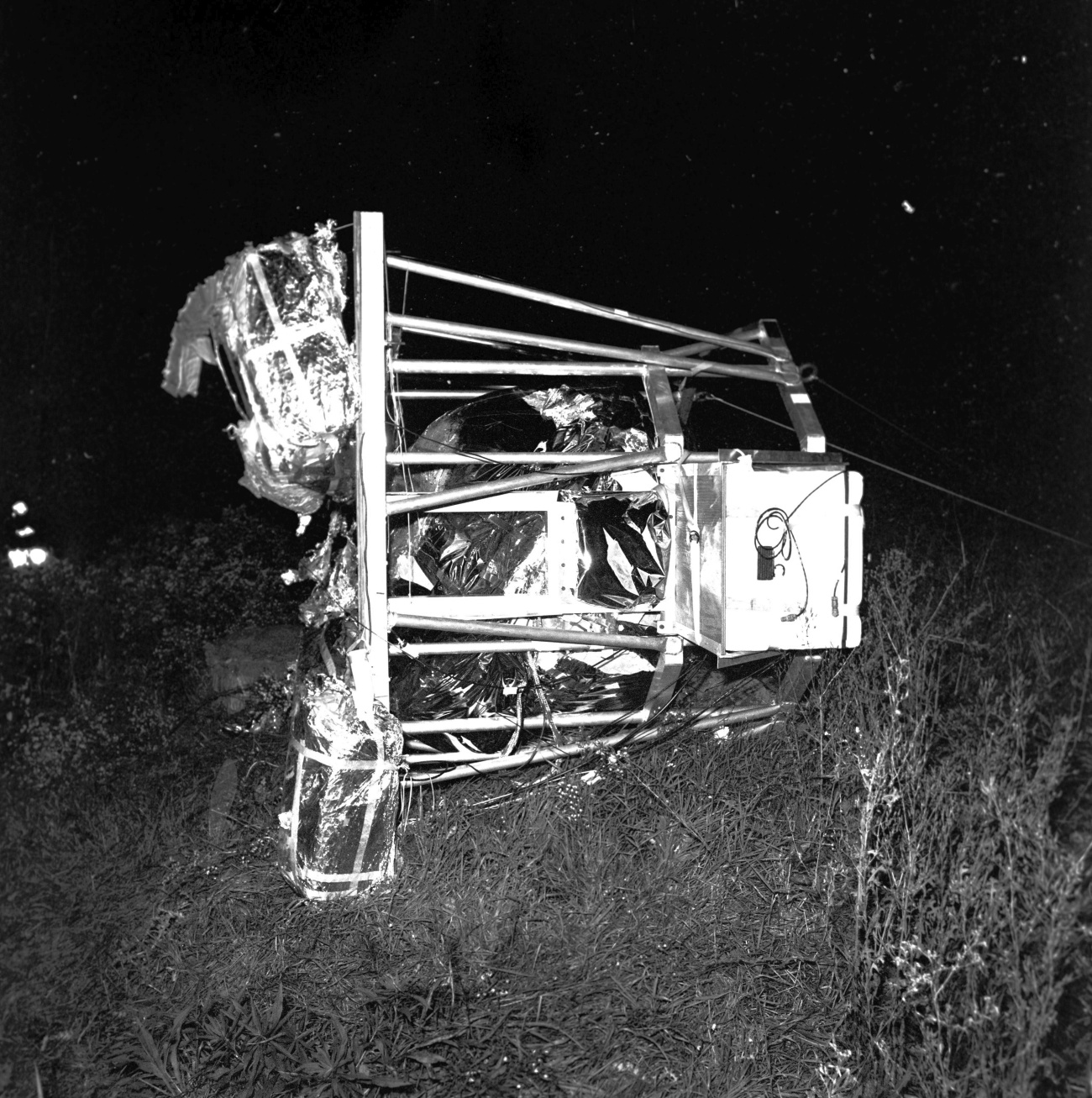
The balloon was launched form Sioux City Airport in Iowa at 7:35 CST on October 13, 1973. After a nominal ascent of near three hours, the balloon reached the float altitude of 43 kilometers and remained in flight for eight more hours. During the float period the balloon was caught by a jet stream reaching speeds as high as 150 kilometers per hour, causing a fast eatbound displacement. The flight finally ended over the state of Michigan, with the landing of the payload occurring SE of the city of Flint, suffering little damage. The experiment and gondola subsystems have worked perfectly.
Postal cover issued on launch day commemorating the flight
External references
- National Scientific Balloon Facility Annual Report FY 1974 National Center for Atmospheric Research, December 1974
Images of the mission
StratoCat is an independent, non-commercial project maintained to preserve and share the history of scientific and stratospheric ballooning. If you find the site useful, you can help keep it running with a small donation toward its operating costs. Every contribution, even the equivalent of a cup of coffee, is greatly appreciated.